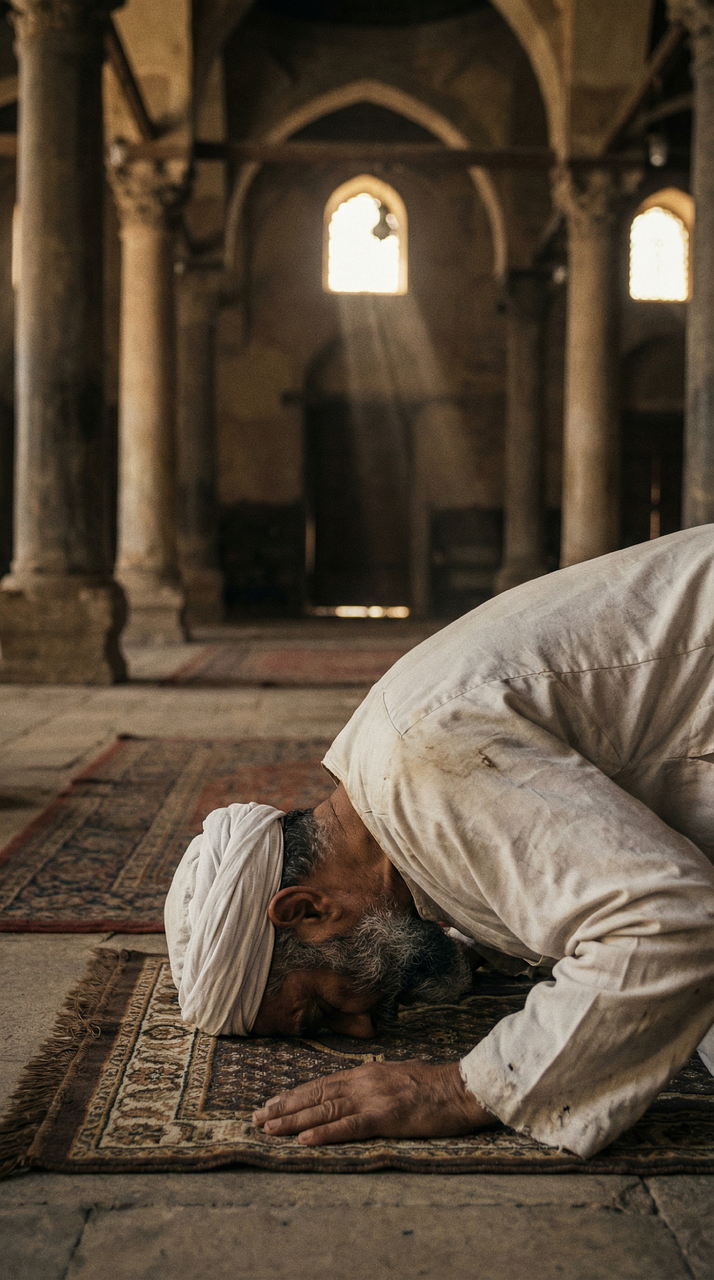
Still Pray
by SAM Ruh
When you won't feel like praying... still pray.
When you don't feel like making wudu... just push yourself to cleanse yourself.
When you don't feel like doing the act of worship, Ruku,Sujood, Tashahud —still...spread out the prayer mat and stand on the prayer mat
If you don't feel like reciting the surahs- Just be quiet, recite the surahs in your head, and act out the salah steps.
Just the act of salah. Just get through the rakats-Get to the end. Say the salaams.
---*---
If you dont want to make the duas- Still think about it. Allah knows your heart. Still think about what you want fixed. Push yourself to sit in the mat, just a little more.
There are days when prayer feels effortless, when the call to worship pulls you naturally toward the mat, when every word flows with meaning and every movement feels purposeful. But those days are not every day.
Most days are ordinary. Some days are harder. On those days, the distance between where you sit and where the prayer mat lies feels impossibly far. The wudu feels like an inconvenience. The standing feels like a burden. The words feel empty in your mouth.
This is when the real test begins—not the test of your devotion when it's easy, but the test of your commitment when it's hard.
So you push yourself. You don't wait for the feeling to come. You don't wait until you're inspired or moved or spiritually awakened. You simply stand up. You walk to the bathroom. You let the water run over your hands, your face, your arms. The cold shocks you into presence, even if your heart isn't there yet.
You walk to the prayer mat. Maybe your mind is elsewhere—on work, on worries, on the hundred small tasks pulling at your attention. It doesn't matter. You stand anyway.
You raise your hands. You bow. You prostrate. Even if the words feel mechanical, even if your focus drifts, even if this prayer feels like nothing more than going through the motions—you complete it.
Because here's what they don't tell you about faith: it isn't always a burning flame. Sometimes it's just a pilot light, barely flickering, sustained only by the repetition of showing up. The act itself becomes the devotion. The discipline becomes the love language when the feelings have gone quiet.
You pray not because you feel like it, but because you committed to it. You pray because some part of you knows that consistency builds something that emotion alone cannot. You pray because the you who doesn't feel like praying still needs it—maybe even more than the you who does.
And sometimes, halfway through that reluctant prayer, something shifts. Not always. Not even often. But sometimes, in the middle of a movement you've done a thousand times before, presence arrives uninvited. The words that felt hollow suddenly carry weight. The act that felt empty suddenly fills with meaning.
But even if that moment never comes, even if the entire prayer feels distant and mechanical from beginning to end—you still prayed. You still showed up. You still honored the commitment you made, not to a feeling, but to something greater than feeling.
That is the prayer that counts most. The one you didn't want to do, but did anyway.
PRAY ANYWAYS!
Making Duas
by SAM Ruh
What is the definition of dua?
Dua (Arabic: دعاء) is the Islamic act of supplication, prayer, or invocation, serving as a direct, personal, and informal conversation with God (Allah) to ask for help, mercy, forgiveness, or blessings. It is considered an essential, heartfelt act of worship that can be performed anywhere and at any time, distinguishing it from the formal, prescribed prayer Salah.
How do you make your duas?
Duas are a powerful way to connect with Allah, and how you approach this sacred act can shape your experience significantly.
Do you make your duas by begging and pleading, fully aware that you are seeking the Mercy of Allah?
Picture yourself standing before your Creator, feeling the absence of barriers that might separate you from Him.
When you make a dua, do you truly believe that He hears you? That He sees you and is watching closely as you lay bare your wants and needs?
This moment is deeply personal, and sharing your thoughts and desires with Allah requires an immense level of trust.
Do you have faith that He will respond to your heartfelt supplications? As you make your prayers, consider whether you are convinced that what you are asking for will be granted, especially if it leads to goodness in your life.
It's essential to remember that sometimes, what we desire may not align with what is truly best for us.
Do you understand that if your request doesn't serve your highest good, Allah, in His infinite wisdom, may offer something even greater, something beyond your imagination?
Reflect on the manner in which you make your duas. The sincerity and faith with which you approach this practice can transform your relationship with Allah and deepen your spiritual journey.
Embrace the trust and belief that comes with making dua, knowing that your Creator is always listening, always aware, and always guiding you towards what is right for you.
Do not forget to say Alhamdulillah. This simple yet powerful phrase is a reminder to express our gratitude for all that we have. Acknowledging Allah’s infinite mercy, even in moments of disobedience, allows us to reflect on His kindness and generosity. Every breath, every moment, and every blessing is a gift from Him, and expressing gratitude helps us appreciate these treasures.
Make it a habit to say Astaghfirullah. Seeking forgiveness for our daily sins, whether we are aware of them or not, is crucial in our journey of faith. We all make mistakes, but by acknowledging them and asking for forgiveness, we open the door for renewal and growth. This simple act helps cleanse our hearts and brings us closer to Allah.
And remember, Allahu Akbar. He is the Creator of the universe and possesses the power to do anything. Recognizing His greatness reinforces our faith and reminds us of the limitless possibilities that exist when we place our trust in Him.
Lastly, do not be shy when asking for your wants and needs. There is nothing impossible for Allah. When we approach Him with our hearts open and our requests laid bare, we welcome His support in our lives. He knows our desires and needs, and He is always willing to listen.
As we make our duas, let’s make a conscious effort to remember these phrases and the profound meanings behind them. They serve as powerful reminders of our faith and encourage us to live with gratitude, humility, and courage. Embrace each day with a heart full of thanks, ready to seek forgiveness, and confident in the greatness of Allah.
When You Don’t Know What to Be Thankful For
by SAM Ruh
Is there a time when you feel you don’t know what to be thankful for?
Life can sometimes feel like a lengthy list of complaints, where everything seems to be going wrong. Perhaps your mind is telling you that you’re in constant pain and there’s no purpose to keep moving forward. You may feel like there's nothing to look forward to and wonder what is even right in your life.
Things to Think About
1. Your Health:
Do you have your health? Are you able to get out of bed every day and engage in your daily activities? Consider the simple tasks you accomplish—brushing your teeth, bathing, getting ready for work or school—these are all signs of independence and health.
2. Work and Purpose:
Do you have a job or school to attend? A place that allows you to utilize your skills and earn money to support yourself? Think about how this work may help support your family as well.
3. Family and Friends:
Are you part of a family that cares for you? Are your loved ones healthy? Do you have a safe space to return to after a long day? The support of family and friends can provide a comforting foundation in tough times. It’s important to reflect on the relationships in your life, whether they are with parents, siblings, or friends. Do you have someone to talk to about your thoughts and worries?
4. Basic Necessities:
Consider your living conditions. Do you have food on your table? Are you able to prepare meals in a clean kitchen? Do you have a space to eat and a restroom for personal hygiene?
5. Comfort and Safety:
Do you have a place to sleep, a refuge to retreat to when you’re tired? Is your home located in a safe neighborhood? Can you rest peacefully at night, free from fears of danger?
6. Opportunities for Adventure:
Are you able to take vacations and visit new places that rejuvenate your spirit? Do you have the means of transportation to travel and explore the world around you?
Gratitude can often be found in the simplest of things. When you start to list what you have, you may discover things to appreciate that are often overlooked. Life may present challenges, but recognizing the positives can be a game-changer. Acknowledging these aspects of your life can reignite a sense of purpose and fulfillment, even during difficult times.
Next time you feel lost in your complaints, take a moment to reflect on these questions and see if gratitude begins to fill the spaces of despair.