
Poetry
UnraveledA Package Called Love
Love in all its seasons: the burning, the breaking, and the slow becoming of a heart that learns to love again.
Some truths only survive as stories.
SAM writes in the language of longing,
where faith wrestles doubt, where love quietly becomes loss,
and where honesty matters more than resolution.
I am taking some time off from writing: perhaps to return one day, perhaps to explore new avenues as life moves steadily on. Either way, I have loved every moment of this chapter.
It usually happens quietly. A friend sends me a few lines and asks, “Is this yours?” I read them once, then again, and something in me says, this is lovely, who wrote it? It takes a moment to realise the answer is me.
It happens with the books I read, too. I close the last page with my heart full, certain I will carry that story for years. A few months later someone mentions it, and all I can find is how it made me feel: a warmth, an ache, the colour of a page. The plot has slipped away. The names have gone. Only the feeling stays.
For a long time I kept this to myself. A poet who forgets her own poems sounded like a contradiction, something better left unsaid. I write so that I can hold on to things, and still, they slip away.
So I went looking, and I found that I am far from alone.
Writers and artists have a name for it: creative amnesia. You make something with your whole heart, and once it is out in the world, it quietly leaves you. The poem lets go of you the moment it lands on the page.
Psychologists call the fading itself transience. Daniel Schacter, a Harvard psychologist who has spent his career studying how memory works and fails, lists it first among his “seven sins of memory.” Long before him, in 1885, a German psychologist named Hermann Ebbinghaus tested his own memory and drew what we now call the forgetting curve: most of what we take in begins to fade within hours and days, unless we keep going back to it.
And readers have their own phrase, reading amnesia. Even Michel de Montaigne, the 16th-century French writer who invented the essay, admitted that he picked up books he had already read as if they were new. So he began writing a short note at the end of each one, to remind himself he had been there.
Reading about them, the embarrassment went away. Forgetting is not a flaw in a writer. It is how memory works, for all of us. Maybe that is why I write at all. My books remember what I can’t, and every time I open one, I meet it again, like a letter from a stranger who somehow knows me very well.
My words remember
what I forget.
Ever since my student years ended, I have worked in IT, and over the years I have moved through almost every corner of it: analysing problems, building solutions, seeing them through to delivery, organising the pieces and managing the people who make them happen. It is a world of logic, systems and deadlines.
Everything else, I did alongside it: part time, but never half-heartedly. I was a radio jockey, sharing old Bollywood songs on desi radio in New Jersey and Chicago, and learning that music is just another kind of poetry. I sang karaoke, a microphone in my hand, some songs a little off pitch, some not, and slowly, with time, I got better. I acted, too: sometimes in funny roles, sometimes lip-syncing to old songs, sometimes striding about like a Bachchan, and sometimes playing a Heer, adored beyond measure by her Ranjha. Into each of these I poured everything I had: my passion, my energy, my whole heart. That is where I felt most alive.
And through every role and every song, one thing never left me: writing, and rewriting. That always stayed.
Many of these poems were written by a woman who was invisible as a child and never quite fit in as a teenager. She still doesn’t fit in. The difference is that she no longer regrets it.
That woman is me. Writing these poems was how I learned to be seen, on my own terms. Across six books I have said what I needed to say: about love and its undoing in Unraveled, about the people who stay with us in Etched Memories, about falling and getting back up in Rising, about finding my way back to faith in Surrender, about the lives of others in Fragments, and about the heart’s small madness in Thoda Sa Rumaani Ho Jaaye.
Because I believe these books have done what I needed them to do.
For now, I am setting down my pen as SAM Ruh and taking some time away from writing, and I am smiling as I say it. This chapter has been one of the most joyful of my life: poems that arrived out of nowhere, stories that grew from a song or a passing conversation, covers and forewords made by people I love, and readers who found a piece of themselves in these pages.
I am not stepping away empty.
I am stepping away full.
Now I want to explore other avenues, and discover who I am when I am not writing it all down. There is another side of me waiting to be found, and I am excited to go and meet her. Life is moving on, steadily, and I am moving with it.
I may come back to writing one day. If I do, it will likely be something completely different from anything I have written before: a new voice, for whoever I become next. Either way, the door stays open.
Everybody loves a perfect story. I have been carving mine for years, and it has turned out to be the most flawed, most imperfect story I know. Perhaps that is exactly where its beauty lies. My story is already written, and I am living it, right now, in this very moment.
In Islam, this has a name: Qadr (قَدَر), divine decree. Believing in it is one of the six pillars of faith: that everything in a life, the joy and the ache, every meeting and every parting, was known to Allah and written before it ever came to be. The Prophet ﷺ said, “The pens have been lifted, and the pages have dried.”
For a long time, I wished I could change my story, make it more interesting, rewrite the parts that hurt. Qadr asks something gentler of me. I am not the writer of my story. I am the one living it. My part is to live it well: to try, to pray, to choose, and then to trust the One who holds the pen.
There is a quiet peace in that. What has passed me by was never meant to reach me, and what has reached me was never meant to pass me by.
My story is already written.
I am living it, right now.
And if I forget these poems one day, that’s alright. They are yours now. Thank you for reading them with me.
Not an ending. A new beginning.SAM Ruh
Love in all its seasons: the burning, the breaking, and the slow becoming of a heart that learns to love again.
Tap a cover to see it up close.
Every book opens with a voice from someone close to SAM. Here is a little of what they found in her pages.
“She trusts silence to do the work that other writers hand to adjectives.”
Unraveled follows a love from beginning to end: the falling, the devotion, the doubt that arrives uninvited, the break, and the slow mending afterward. Nothing here is hurried, and nothing is dressed up to seem wiser than it was at the time. … That is Sam’s gift. She trusts silence to do the work that other writers hand to adjectives.

“Sometimes it simply places something honest before us and waits for us to feel.”
Sam’s voice has an appealing openness. Her poems do not distance themselves from emotion; they rhyme, reflect, question, grieve, and celebrate. … Poetry does not always announce what it intends to do. Sometimes it simply places something honest before us and waits for us to feel. That, ultimately, is the gift of Sam’s collection.
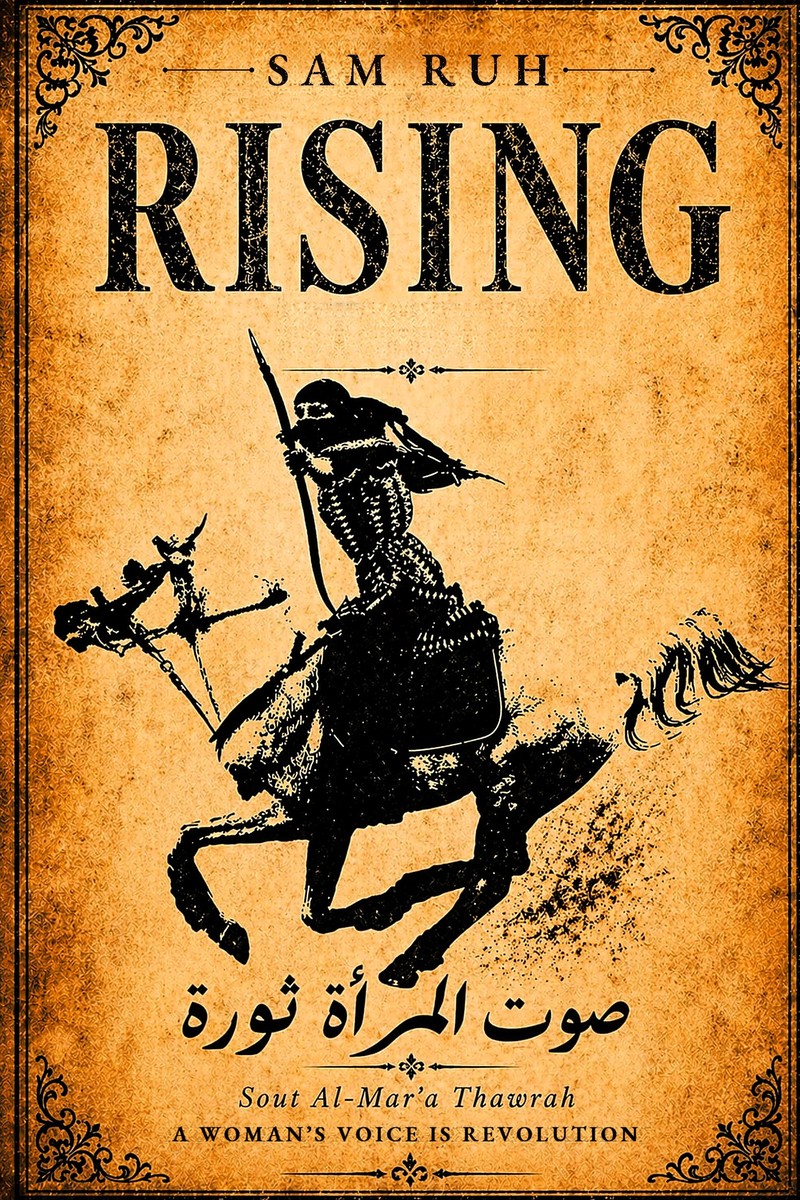
“They simply say: you are not the only one who has felt this way.”
Many people will see themselves in these pages. … SAM’s poems give that feeling. They do not judge the reader or tell them what they must do. They simply say: you are not the only one who has felt this way.
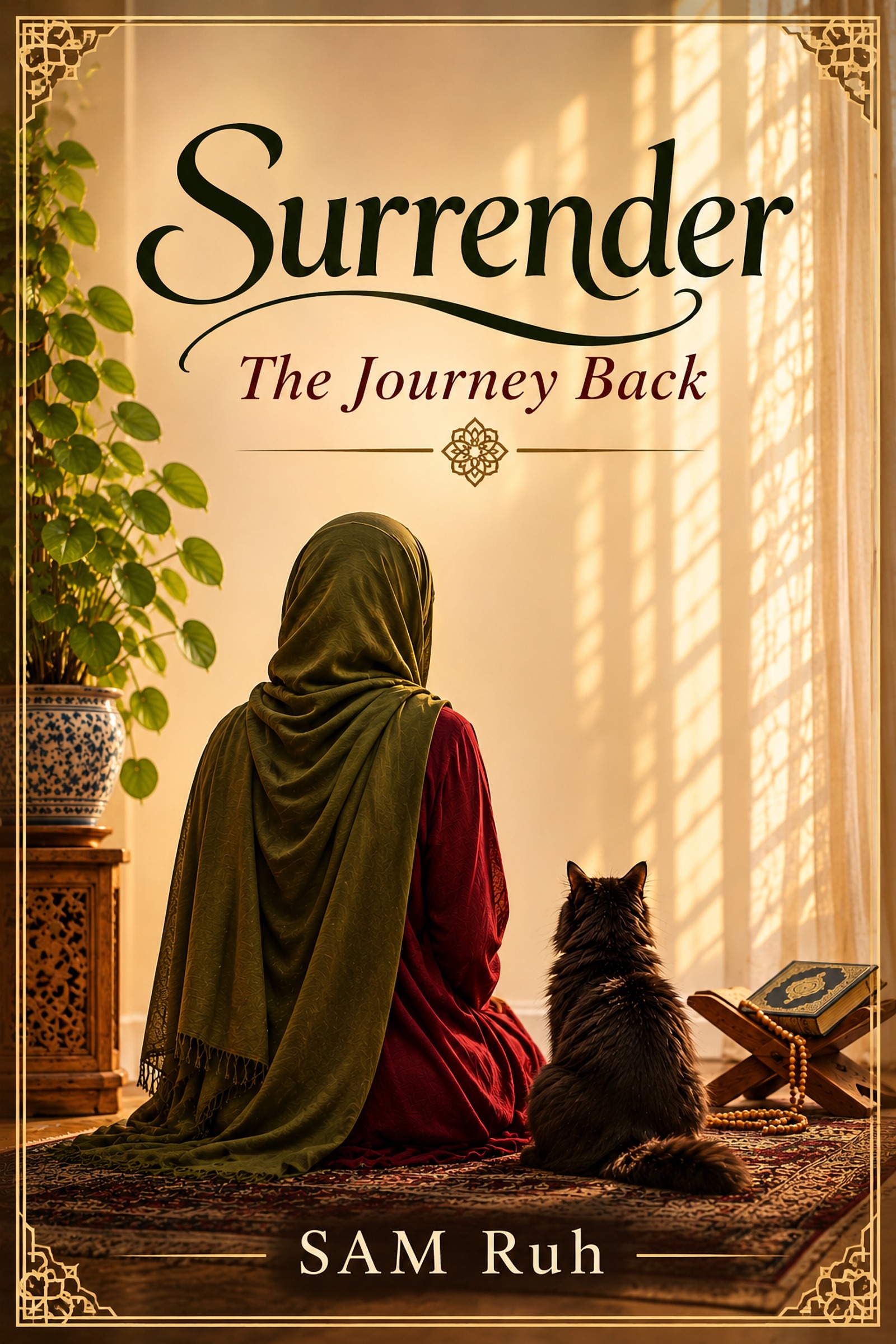
“The distance between our brokenness and Divine grace is only as long as a single, sincere sajda.”
What SAM Ruh does so effortlessly in these pages is translate the infinite into the intimate. Her poems speak of turning back to the One True God, over and over again, in complete surrender. … Through her words, we are reminded that what is meant for us will never pass us by, and that the distance between our brokenness and Divine grace is only as long as a single, sincere sajda (prostration).

“Her stories become your stories, and her thoughts become yours.”
SAM’s words in each of these pieces will leave a mark on your heart. Whether it is Ann, Ramesh or Jazz, you will see yourself in these characters. We have all walked these paths. … Her stories become your stories, and her thoughts become yours.
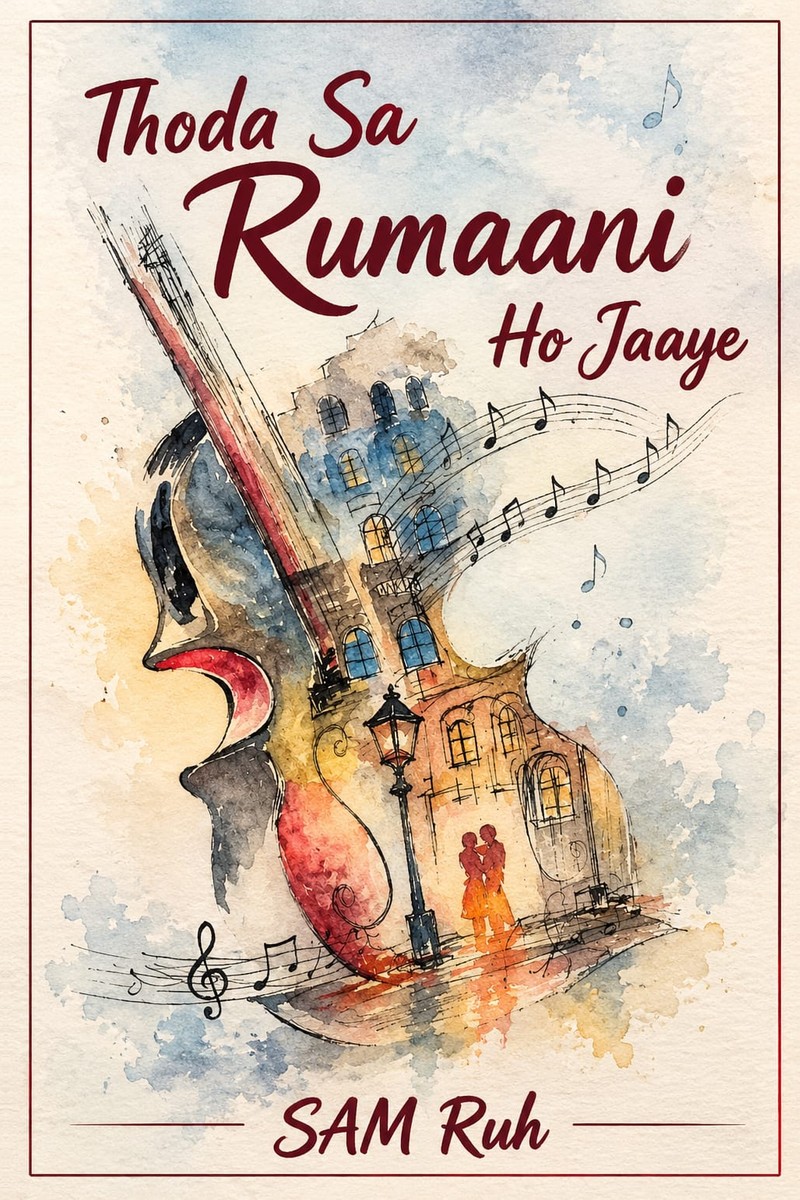
“It feels as if you have just stepped outside after a heavy rain.”
Is kitaab ki khaasiyat ye hai ki har ek kavita ik ehsaas ki tasweer kheenchti hai. … Ye kitaab aapko phir se sukoon ke saath apne dil ki sunne ki salaah aur ijaazat deti hai. Ye kuchh aisa ehsaas dilaati hai, jaise ik bhaari barsaat ke baad aapne abhi-abhi ghar ke baahar qadam rakha ho.
What makes this book special is that every poem paints a picture of a feeling. … This book gives you the advice, and the permission, to listen to your heart again, in peace. It feels as if you have just stepped outside after a heavy rain.
“What we feel but cannot say, SAM has put down on these pages.”
SAM Ruh ki nazmein shor nahin kartin. Wo un baaton ko lafz deti hain jo aksar dil mein reh jaati hain. “Thoda Sa Rumaani Ho Jaaye” padhte hue mujhe kai baar laga ki jo hum mehsoos karte hain, magar keh nahin paate, use SAM ne in pannon par utaar diya hai.
SAM Ruh’s poems make no noise. They give words to the things that so often stay in the heart. Reading this book, I often felt that what we feel but cannot say, SAM has put down on these pages.
The ache of being understood.
SAM writes where faith meets feeling. Her work moves through love in its many forms: the ache of longing, the weight of loss, and the quiet strength of surrender.
On existenceSAM often wonders what our existence means for the idea of heaven and hell. It's a question she doesn't shy away from.
نہ تھا کچھ تو خدا تھا، کچھ نہ ہوتا تو خدا ہوتا
ڈبویا مجھ کو ہونے نے، نہ ہوتا میں تو کیا ہوتا؟Na thā kuchh to khudā thā, kuchh na hotā to khudā hotā,
Duboyā mujh ko hone ne, na hotā main to kyā hotā?When there was nothing, God was there; if there were nothing, God would still be there.
Mirzā Ghālib
My existence has undone me — if I were not, what would I have been?
On love, and what lies beyond itاور بھی غم ہیں زمانے میں محبت کے سوا
راحتیں اور بھی ہیں وصل کی راحت کے سواAur bhī gham hain zamāne mein muhabbat ke sivā,
Rāhatein aur bhī hain visl kī rāhat ke sivā.There are other sorrows in this world besides the agony of love.
Vasl = Union Faiz Ahmed Faiz
There are other joys too, besides the joy of union.
On the world, and what waits beyond itٹک حرص و ہوا کو چھوڑ میاں مت دیس بدیس پھرے مارا
قزاق اجل کا لوٹے ہے دن رات بجا کر نقارا
…
سب ٹھاٹھ پڑا رہ جاوے گا جب لاد چلے گا بنجاراṬuk hirs-o-havā ko chhoḍ miyāñ, mat des bides phire mārā,
Qazzāq ajal kā lūṭe hai din rāt bajā kar naqqārā.
…
Sab ṭhāṭh paḍā rah jāvegā, jab lād chalegā banjārā.Let go of greed and longing for a while, friend; stop wandering from land to land, worn out.
Hirs-o-havā = greed and desire · Ajal = the appointed hour of death · Banjārā = a wandering trader Nazeer Akbarabadi, from “Banjara Nama”
Death, the bandit, is raiding day and night, beating his drum.
…
All this splendour will be left lying here, when the wanderer loads up and leaves.
Her writing lives in the in-between, where questions are allowed and silence is honored.
Some words choose you before you choose them. One piece from each of SAM’s books, to begin with.
My eyes well up, my heart feels crushed, To the very edge, my soul is pushed. I want to scream, I want to cry, But still my mind says, “One last try.” Let me see you, face to face, I start to pace, this anxious space. Should I call, and can we talk? Or clear my head upon a walk? I take my phone, unlock the screen, And wonder how long it has been? I type the words I’ve typed before, While my anxious heart aches to its core. “Do you love me, do you care? Would it matter if I wasn’t there? Do you see my pain, do you feel my plea? Or is there nothing left for me?” The memories from the past block the door, As I gather the fragments I’ve gathered before. You promised the sun, but you left me in the rain, And I’m digging a grave to bury this pain. I trace all the messages left on “Unread,” Reliving the arguments, the harsh things you said. The shadows, the anger, the love I can’t see, The trust that was broken, unraveling me. I’m tired of waiting for sparks in the cold, Accepting the empty, the lies I was told. My spirit is tired, my heart has been scarred, The cycle repeats each time I drop my guard. I stare at the words on the screen, my plea, Waiting for answers, I’m frightened to see. My fingers now hover, afraid to hit Send, Is this the beginning, or finally the end? I swallow the lump that rises from deep, And hold back the tears I am trying to weep. I lock the device, I take a long breath, So tired of walking this cycle of death. I cannot keep begging, I cannot keep score, I know I deserve so incredibly more. So I delete the text, and I turn off the glow, Some feelings are things you must simply outgrow. The screen goes black, and the silence is sweet, I’m walking away… standing tall on my feet. Love should always be an easy find. Especially when we are good and kind. So today I end, this cycle of pain. No one here is left to gain. Let this stay unsent, one that you will never read. Let me grow again, from a sown seed.
I can’t stop calling your name, Not for glory, nor for fame. Each day began with your voice, your touch, And ended with, “You’re too much.” I can’t recall a day without you – Through highs and lows, all was true. You breathed your life into me, A gift of freedom, to simply be. I grew, I thrived, I soared, I cried, I gained and lost, I lived, I died. I complained, but rarely praised, Yet you remained, patient, unfazed. Then came tragedies, both big and small, You stood firm, our rock, through it all. You battled fear and dread with grace, A miracle unfolding before our gaze. Now strong and ready to face the fight, I still feel lost in the dead of night. Yet when I rise and confront my fears, They vanish, dissolving through my tears. Now, She is frail, her strength has waned, Yet courage in her heart remained. War and hardship were her art, “Stand tall,” she said, with a warrior’s heart. The day she passed, the world stood still – Could it be true? It was not His will. I sat in silence, my tears refused to flow, This, the harshest of life’s blows. Time moves on, yet she stays with me, In my heart, my mind, my memory. She’s not gone – she guides my way, Her love eternal, here to stay.
I don’t feel anything today, no good, no bad, nothing to say. No love to feel, no hate to peel, no scar to hide, no wound to heal. I don’t feel anything today, not even my usual hollow way, where I cry in pain and hide in vain and smile, insane, through all the rain. I don’t feel anything today, yet tears still find their quiet way. My thoughts are blank but heavy still; no feeling moves, no rise, no thrill. I don’t feel anything today, no fire left, no words to pray, just emptiness where I used to be, a quiet that has swallowed me. I don’t feel anything today, and people pass and go their way. They see my face and see me fine; they never read between the lines. I don’t feel anything today, and that is how we slip away, not with a sound, not with a sign, just dimming out behind the eyes. I don’t feel anything today. Unnoticed, I just fade away. The world moves on without a pause, and I dissolve, hoping there’s a cause. Some people die without a wound or war; no one finds out what they were dying for. They just went quiet, then they went away, and you walked past them every single day.
When things are not as I wished them to be, when I feel I am no longer me, I want to return. When people say they love, but it all ends, when places feel like home until something bends, I want to return. When I am winning, but then it’s a loss, when I am searching, but there is no cause, I want to return. When the crowd is loud but I stand alone, when I am surrounded, yet feel unknown, I want to return. When the prayers rise but the sky feels sealed, when the scar is old and still not healed, I want to return. When the words inside me find no door, when I have given all and have no more, I want to return. When the mirror shows a stranger’s face, when I run and run but lose the race, I want to return. When the night grows long and sleep won’t come, when the life I built has come undone, I want to return. When I speak the truth and no one hears, when I hold it all and choke on tears, I want to return. When I wear a smile that isn’t mine, when I walk a path I thought divine, I want to return. And perhaps return is simply this: the moment that I stop running from what is, the breath I take before I break in two, the quiet in me that still knows who. Not a place behind me, not a page before, return is finding myself behind the door I kept on walking past, in search of more. I wanted to return. I just never knew I was already there.
There was a knock, and the doctor opened the door in slow motion and slipped in, quiet as a cat. Ramesh looked at Anu to see if the knock had woken her. Her eyes were closed and her face looked peaceful. The doctor came closer and said in a low voice, “It’s cancer. We knew that. But she is in the final stage. I have to be honest with you, Mr. Ramesh. She has very little time.” Ramesh felt light-headed and sank into the chair beside him. Dr. Ram gripped his shoulder and gave it a small shake. “Stay strong.” Then he turned and walked out as quietly as he had come in. The door closed loyally behind him with a perfect click.
Ramesh buried his face in his palms as tears ran down. Wiping them away, he sniffled quietly, reminding himself that Anu was in the room. When he looked up at the bed, he found Anu smiling down at him. As her lips curved, her forehead tightened. She signaled him to come closer. He went to her and let his hand stroke her head. She held his hand softly at first, then pulled him close with a sudden jerk, tightening her grip.
“Never worry about me, Ramesh,” she said firmly. “I don’t fear death. I am ready to die. Right now, even, with you by my side. All I worry about is this.” She asked him innocently, as a tear rolled down her cheek toward her lips, “Will I miss you after?”
Tum paas na raho, phir bhi tumhaari maujoodgi mehsoos hoti hai. Tum jab muskuraao, khushi hum pe meharbaan hoti hai. Tum ghair hi sahi, hum mein shaamil se lagte ho. Tum qareeb na sahi, dil ke aasmaanon mein lagte ho. Tumhaari aawaaz nahin, phir bhi wo sunaai deti hai kaise? Tumne chhua bhi nahin, par mujh mein base ho aise. Kabhi aisa lagta hai, tum haqeeqat mein ho bhi nahin. Phir ehsaas hota hai, tere baghair zinda rehna mumkin hi nahin. Kuchh log zindagi mein aate hain achaanak aise. Ban jaate hain hissa, hamesha se hamaare rahe hon jaise. Phir kahin gum ho jaate hain, kabhi na milne ke liye. Dil karta hai sawaal, ab aage kaise jiyen? Tum hamaare lagte ho kaun, iska jawaab nahin milta. Par tere baghair zindagi ko chain bhi to nahin milta. Kuchh rishte aise bhi, jinke naam nahin hote. Mere-tumhaare jaise qisse, mere dost, kabhi aam nahin hote.
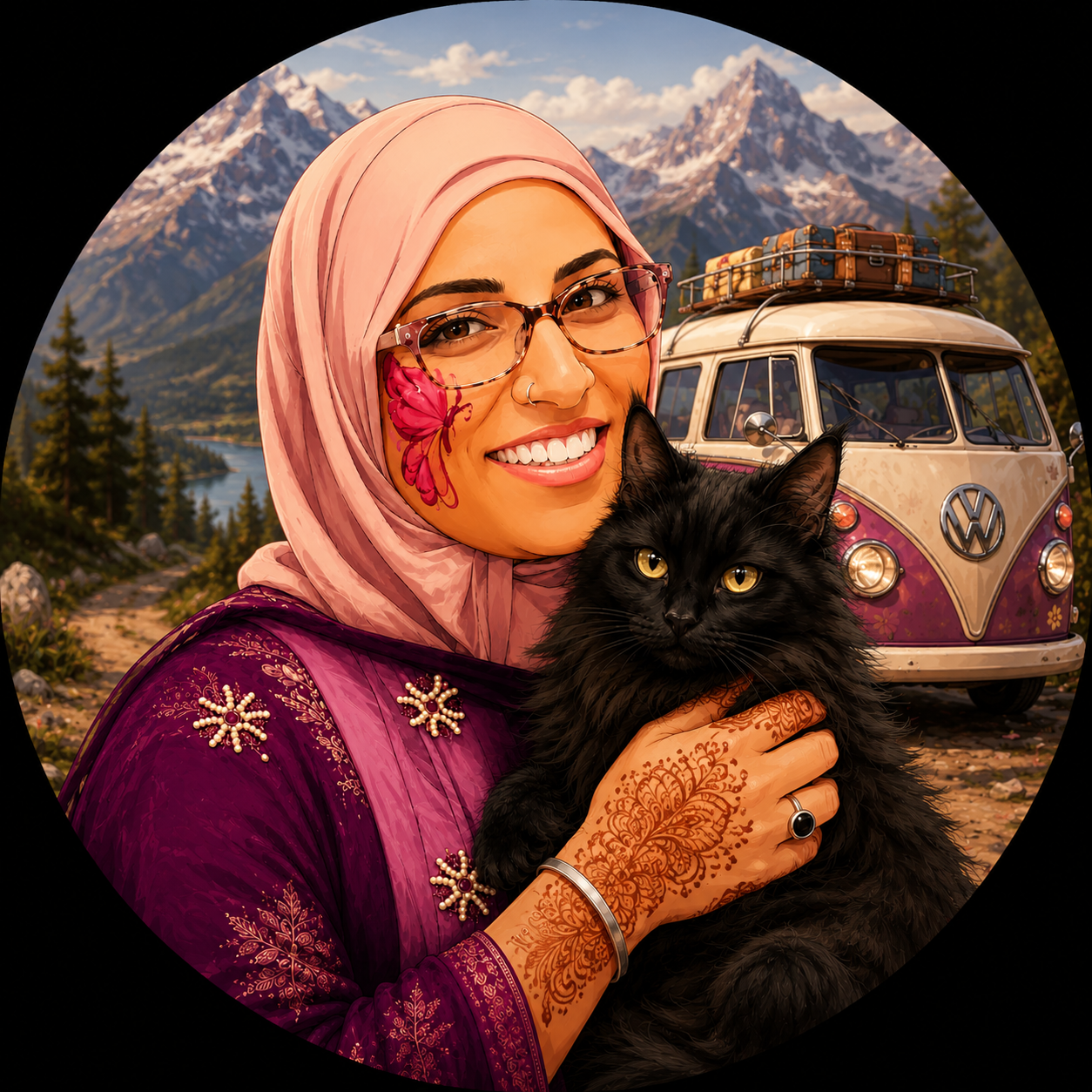
SAM Ruh is a poet, author, and IT professional. Originally from India, she holds a Master's in Computer Applications and calls New Jersey home. As a Radio Jockey, she celebrated classic Bollywood music on desi radio channels in New Jersey and Chicago.
Her love for Bollywood and its music isn't just nostalgia; it's a thread that connects generations and emotions. Faith, family, and creativity live side by side, each one feeding her curiosity.
Family remains at the core of everything she does. Her husband S.J, their beloved A.J boys, and the Cats form a circle of love and shared dreams.
A space for the quiet weight
Tired, stuck, or feeling low? You're not alone. Come sit with me. There is hope.
Depression is often misunderstood as temporary sadness. For many, it is a quiet, enduring weight that affects the mind, emotions, and the will to move forward.
This is a personal space. It doesn't deny the dark, but it keeps room for hope, for healing, and for the slow return of light.
Get Through ThisYears behind the microphone taught SAM that music is another form of poetry. These are songs she's carried across languages, across time, and into the quiet spaces of her days.
A plea wrapped in dignity. Love, here, isn't loud. It's earnest, patient, deeply human.
The fragile thread between hearts. How easily it trembles. How quietly it breaks.
Rain as memory. Every drop feels like a moment returning, softer than before.
That quiet realization, when feeling turns into knowing, and knowing becomes surrender.
A meeting that feels written long before it happens. Like destiny remembering itself.
Admiration that feels almost sacred. Beauty seen, not just looked at.
A softness that reaches the soul. Love as something quiet, steady, healing.
Words that hesitate on the lips, because some feelings are too delicate to be spoken fully.
The longing for distance, for roads that stretch beyond what the heart can explain.
Morning as a feeling. Gentle, uncertain, and full of quiet hope.
A small map of where SAM has been, in pages.
A life so luminous on screen, so quietly unraveling within.
Mehta's portrait of the tragedy queen stayed with SAM long after the last page. A life so luminous on screen, so quietly unraveling within, and written with the tenderness that kind of pain deserves. Published 1972. An essential for anyone who's ever felt the distance between a public face and a private heart.
A quiet warning and a love letter, both.
Alvi writes from the inside: the collaborator, the witness, the friend who watched genius consume itself. What emerges isn't just a portrait of a filmmaker, but of devotion to a craft that consumed its maker. SAM reads it like a quiet warning and a love letter both. Out of print in many editions, so seek it out.
Survival and tenderness in the same breath.
Set in 1970s India, this novel follows four strangers thrown together by circumstance: a widow, two tailors, and a student. Few novels ask this much of a reader and give back this much in return. Mistry writes about survival and tenderness in the same breath, and SAM has never quite recovered from the ending. Longlisted for the Booker Prize.
What does a woman need to be truly free?
Six women. One overnight train between Chennai and Bangalore. A question that runs through every conversation: what does a woman need to be truly free? Each woman's story unfolds across the night journey, quietly devastating, quietly hopeful. SAM found pieces of herself in every compartment of this book. Published 2001, it remains startlingly relevant.
More titles added as SAM's shelf grows. Check back, or write to her with your own.
Community isn't just where you live. It's how you show up for the people around you.
As a Muslim woman who has called Central Jersey home for many years, SAM knows the small things that matter: a warm halal café after a long day, a masjid that opens its doors with a quiet welcome. These guides are her way of giving back.
— From the heart of Piscataway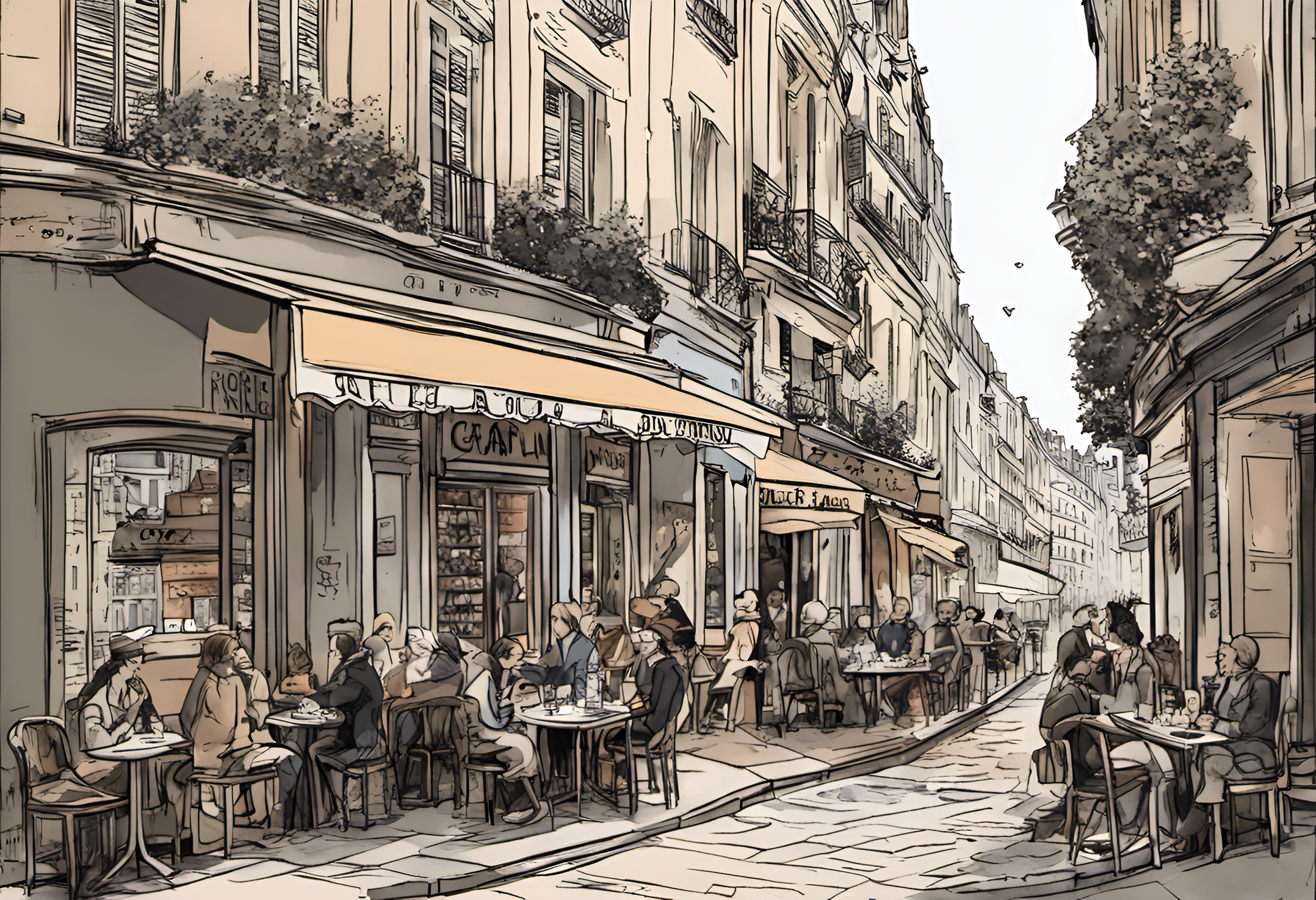
Finding nourishment without compromise. A curated guide to halal cafés and eateries in Central New Jersey, gathered with care and shared with love, for the community that deserves the best.
Explore the Guide →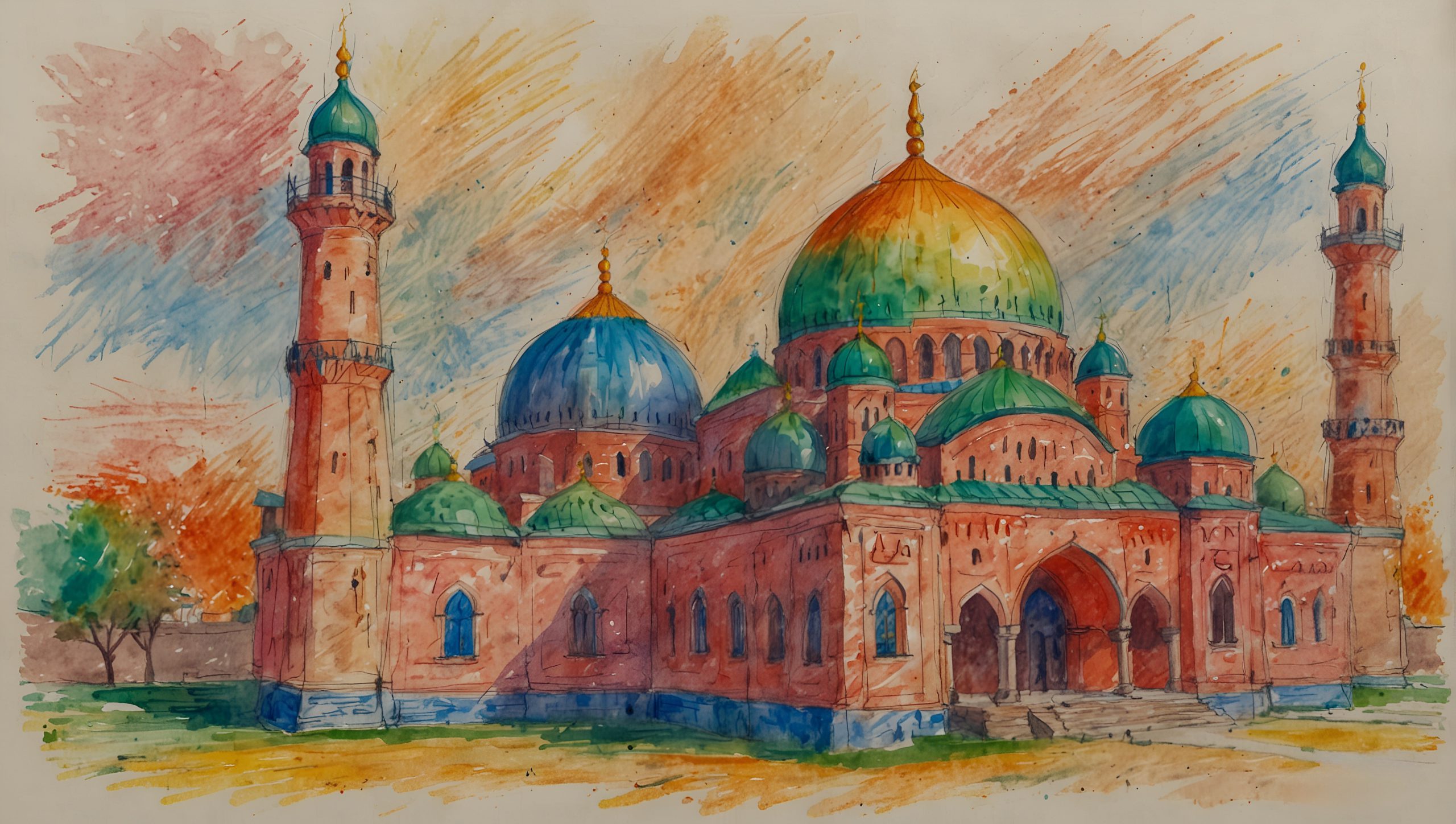
Community, prayer, and belonging. A guide to masjids across Central New Jersey. Knowing where to pray is knowing where you belong, and no one should have to search alone.
Explore the Guide →You Reached Out. That Already Means Something.
Maybe you just finished one of her books and something stayed with you. Maybe you're a fellow creative with the spark of an idea. Maybe you just want to say "I felt this." Whatever it is, SAM would love to hear from you.
SAM lives close to her words and away from the noise. Her true home is this website. Instagram is where she's easiest to reach.