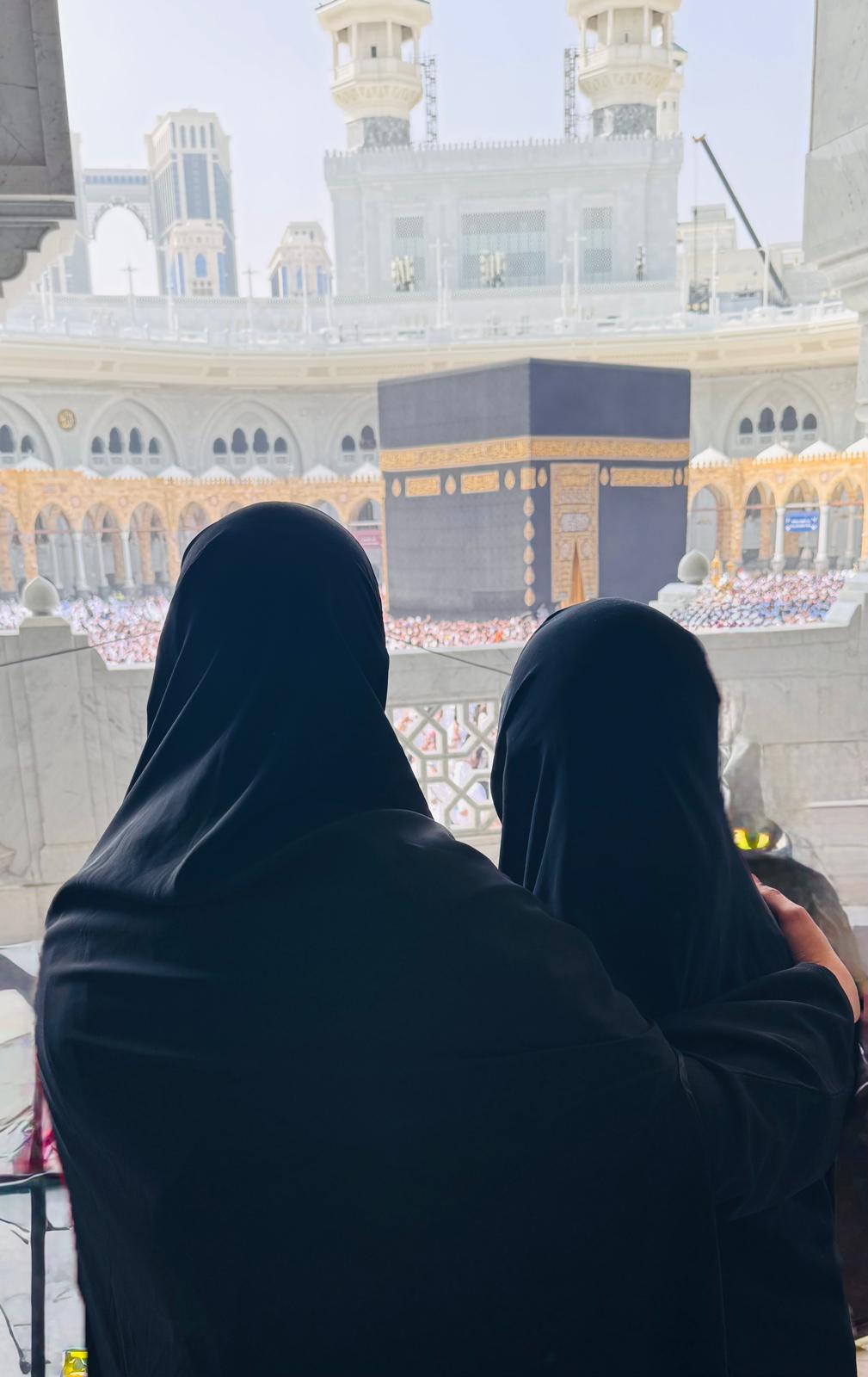
When they planned the Umrah, they hadn't intended for it to fall on a Jummah day. But that was how it unfolded — Umrah on a Friday. What more could one ask for? Fajr was all they could think about. They wanted to be inside the Haram as soon as possible. The hotel had given them simple, straightforward directions — a quick walk to the escalators, they said, and the Haram would be right in front of them.
They left the hotel and walked in the direction they'd been told. The escalators rose upward toward the Haram level. With whatever energy remained, tired bodies fuelled by restless hearts, they walked swiftly. But when they arrived, they found blockades. Multiple gates were closed. Access to the Mataf — the open space around the Kaaba — was restricted.
So they made a decision: they would pray Fajr with the scattered crowd around them. That scattered crowd quickly shifted and aligned. Within moments it had formed a solid, unified shape — rows upon rows of people, all facing the same direction, all waiting for the same call. They removed their shoes and tucked them into their bags. They sat close to one another and prayed two rakats of Tahiyat al-Masjid, the greeting of the mosque. Then they waited.
The Fajr adhaan began. The feeling of listening to it was indescribable. The sound filled the air — deep, resonant, ancient. The sky was beginning to soften. The air was cool against their skin. The floor beneath their feet felt firm and sacred, worn smooth by millions of footsteps over centuries. Everything could be absorbed. Everything was alive. They prayed Fajr. And when the prayer ended, they rose with a singular purpose: it was time to begin Umrah.