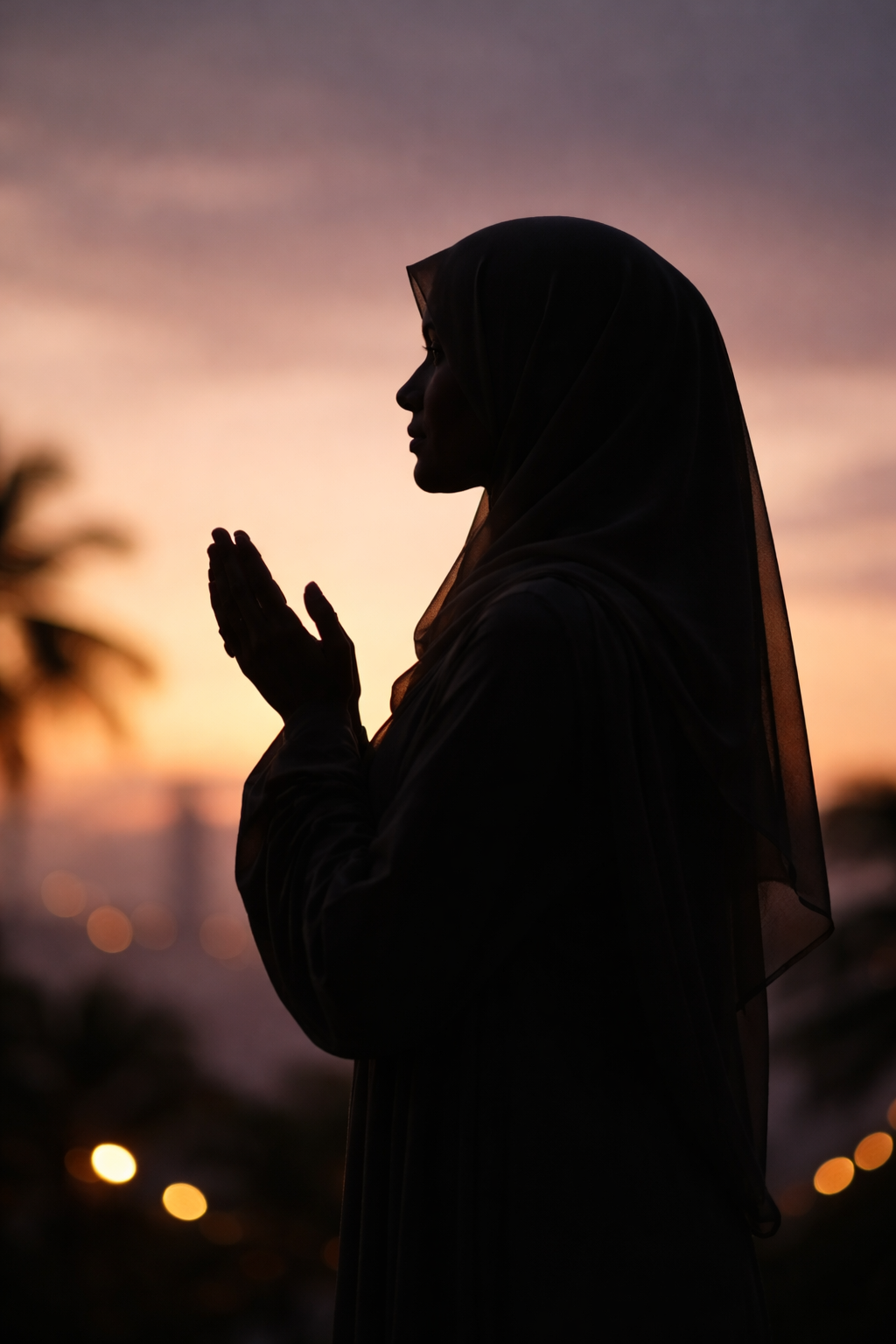
وَلَا تَنسَ نَصِيبَكَ مِنَ الدُّنْيَا
Wa lā tansa naṣībaka min al-dunyā
"And do not forget your share of this world." — Surah Al-Qaṣaṣ 28:77
Becoming Better,
Every Single Day
A guide to daily self-improvement through Islam — how to be a good Muslim in every dimension of life, rooted in Quran, Sunnah, and the wisdom of our scholars.
SAM Ruh ✦ Islamic Living ✦ Self-Improvement
One of the most beautiful things about Islam is that it is not merely a set of rituals confined to the prayer mat or the masjid. It is a complete way of life — a dīn — that speaks to how we wake up, how we speak to our family, how we handle money, how we carry ourselves in heartbreak and in joy, and how we die. Allah subḥānahu wa ta'āla did not send us a religion of Sundays. He sent us a way of being human, every hour of every day.
Self-improvement in Islam is not the language of hustle culture or productivity apps. It is something far older and more profound: the concept of tazzkiyat al-nafs — the purification and growth of the soul. Every Prophet was sent to demonstrate that a human being, through their choices, their remembrance, and their sincerity, can become better. Not perfect — but better. And that journey of becoming is itself an act of worship.
This post is an invitation to look at your whole life — your character, your relationships, your work, your body, your heart — and ask: how does Islam call me to grow here?
The Five Pillars as a Daily Framework
Before we speak of growth in character, relationships, or the world — we return to what grounds us. The five pillars are not a checklist. They are a rhythm that, when practised with presence, restructure how we experience each day.
The Shahādah is not a one-time statement. It is a worldview. When we say lā ilāha illā Allāh with our hearts, we are dismantling every false god — status, ego, money, approval — and recentring ourselves. Return to it daily, in intention if not in word.
Five prayers punctuate the day like checkpoints. Each one is a return from the noise of the world to the presence of Allah. Ibn al-Qayyim wrote that the one who guards their prayer guards their entire religion. Ṣalāh is not a pause from life — it is the spine of it.
Zakāh purifies both wealth and the soul that holds it. It is a constant reminder that what we possess is a trust from Allah, not an identity. Even outside the obligation, developing a generous hand changes who you are from the inside out.
Fasting is radical discipline. To choose restraint over desire, for the sake of Allah alone, is one of the most powerful tools of self-mastery available to us. Its lessons — patience, gratitude, awareness — outlast Ramaḍān itself.
Ḥajj is a journey of total surrender — of status, comfort, and self. Even if the journey is once in a lifetime, its spirit can be cultivated daily: the willingness to stand equal before Allah, stripped of everything, with nothing but sincere intention.
A Muslim's Day — Building a Life of Remembrance
The Prophet ﷺ gave us a complete template for how a day can be lived with grace, purpose, and barakah. This is not about rigid perfection — it is about building an architecture of intention that makes goodness easier and heedlessness harder.
إِنَّ الصَّلَاةَ كَانَتْ عَلَى الْمُؤْمِنِينَ كِتَابًا مَّوْقُوتًا
Inna al-ṣalāta kānat 'ala al-mu'minīna kitāban mawqūtā
"Indeed, prayer has been decreed upon the believers at specified times."
Surah An-Nisā 4:103Akhlāq — The Character of a Muslim
The Prophet ﷺ said: "I was sent to perfect noble character." (Al-Bayhaqī). This is a statement of cosmic significance. The whole mission of prophethood, in one of its most essential dimensions, is the perfection of how a human being is — not just what they do.
أَكْمَلُ الْمُؤْمِنِينَ إِيمَانًا أَحْسَنُهُمْ خُلُقًا
"The most complete of believers in faith are those with the best character."
Abū Dāwūd, Tirmidhī — graded ḥasan ṣaḥīḥṢidq — Truthfulness
In Surah Al-Tawbah (9:119), Allah commands us to be with the truthful. Truthfulness is not only in speech — it is in the alignment of what we say, what we feel, and what we do. Begin by examining where small dishonesty has crept in: in how you represent yourself, in promises you make and forget, in how you describe others.
Ḥilm — Forbearance and Gentleness
The Prophet ﷺ praised two qualities in Ashajj 'Abd al-Qays: ḥilm (forbearance) and anāt (deliberateness). (Muslim). The Muslim who learns to pause before reacting — to choose response over reaction — possesses one of the greatest character virtues. This is not weakness. The Prophet ﷺ said the strongest person is not the one who wrestles others down, but the one who controls themselves in anger. (Al-Bukhārī)
Tawāḍu' — Humility
Allah does not love the arrogant. Tawāḍu' — true humility — is not self-deprecation; it is accurate self-knowledge. It means knowing that every gift you possess came from Allah, and that every human being you encounter carries a dignity that demands your respect. Ibn Ḥibbān's collection records the Prophet ﷺ saying that sadaqah does not decrease wealth, and that the one who is humble for Allah's sake — Allah will raise them.
- Choose one character trait each week to consciously work on — make it your private intention in the morning.
- When someone wrongs you, practice the pause: count to three before responding, and make du'ā for them privately.
- Read Al-Ghazālī's Iḥyā' 'Ulūm al-Dīn — particularly the quarter on character — even one chapter at a time.
- Keep a daily muḥāsabah journal: note one moment you wish you had responded differently, and one moment of goodness to build on.
Relationships — The Weight of How We Treat People
The Day of Judgement will not only examine our prayers. It will examine our ḥuqūq al-'ibād — the rights of people. How we treated our parents, our spouses, our children, our neighbours, strangers on the street: these are the accounts that many of us underestimate.
وَاعْبُدُوا اللَّهَ وَلَا تُشْرِكُوا بِهِ شَيْئًا ۖ وَبِالْوَالِدَيْنِ إِحْسَانًا
Wa'budū Allāha wa lā tushrikū bihi shay'an wa bil-wālidayni iḥsānā
"Worship Allah and associate nothing with Him, and be good to parents..."
Surah An-Nisā 4:36With Parents
Birr al-wālidayn — dutiful goodness to parents — is mentioned in the Quran immediately after the command to worship Allah alone. Even if your relationship with your parents is complicated, the Islamic framework invites you to ask: what is the best I can offer here, within what is right? A phone call, a sincere prayer for them, an act of service — these are not small things.
With Spouse and Family
The Prophet ﷺ said: "The best of you are the best to their families, and I am the best of you to my family." (Tirmidhī). This dismantles any version of Islam that is impressive in public but harsh at home. The home is where character is most honestly tested. Practise patience, generosity, and warmth as daily acts of worship within your own four walls.
With Neighbours
Jibrīl continued to emphasise the rights of the neighbour to the Prophet ﷺ so persistently that the Prophet thought he might make the neighbour an heir. (Al-Bukhārī, Muslim). Do you know your neighbours? Have you checked on them? A simple act of care toward the person next door is a sunnah many of us have lost.
In the Wider Community
The Muslim community is described in the Quran as ummatan wasaṭā — a middle, balanced community, witnesses to humanity (Al-Baqarah 2:143). This means we carry a responsibility beyond our household: to speak justly, to protect the vulnerable, to contribute where we can, and to represent the character of this dīn in every space we occupy.
'Ilm — Seeking Knowledge as an Act of Worship
The very first word revealed to the Prophet ﷺ was Iqra' — Read. Recite. Know. Islam does not reward ignorance. The pursuit of beneficial knowledge is a religious duty, and it is one of the most powerful forms of daily self-improvement available to us.
طَلَبُ الْعِلْمِ فَرِيضَةٌ عَلَى كُلِّ مُسْلِمٍ
"Seeking knowledge is an obligation upon every Muslim."
Ibn Mājah — graded ṣaḥīḥ by Al-AlbānīThis includes religious knowledge — understanding your Quran, your faith, your obligations — but it extends to all beneficial knowledge: your profession, your health, the world around you. A Muslim doctor studying medicine is in worship. A Muslim parent learning how to support a struggling child is in worship. Purposeful learning, with good intention, is an act of taqarrub to Allah.
- Commit to reading at least one page of a beneficial book each day — Islamic or otherwise.
- Study the Arabic of the Quran gradually — even one root word a day opens profound understanding over time.
- Attend a weekly halaqa, online or in person — learning in community carries a different barakah.
- When you learn something, teach it. The Prophet ﷺ said: "Convey from me even if it is one verse." (Al-Bukhārī)
- Approach every life experience as an opportunity for knowledge — reflect on difficulty and joy with the same question: what is Allah teaching me here?
Your Body is a Trust — Health as Worship
"Your body has a right over you, your eyes have a right over you, and your wife has a right over you."
The Prophet ﷺ — Al-BukhārīThe body is an amānah — a trust given to us by Allah that we will be asked about. This is not about aesthetic ideals or societal pressures around fitness; it is about stewardship. When we neglect our sleep, our nourishment, our movement, and our mental health, we are neglecting an act of worship.
Sleep
The Prophet ﷺ discouraged staying awake in idle conversation after 'Ishā. In an era of endless screens and late nights, this sunnah is radical. Protecting sleep is protecting your energy for worship, for presence, for the people who need you alert and alive.
Food
Allah instructs in the Quran: "Eat of what is lawful and good on the earth." (Al-Baqarah 2:168). The word ṭayyib — good, wholesome — is placed alongside ḥalāl. Islam calls us not only to eat what is permissible but what is nourishing. The Prophet ﷺ advised filling the stomach in thirds: one for food, one for drink, one for air. (Tirmidhī)
Mental and Emotional Wellbeing
In the Quran, Allah describes the hearts of believers as finding rest in His remembrance (Al-Ra'd 13:28). Emotional and mental health are not secular concerns outside the bounds of faith — they are deeply Islamic ones. Grief, anxiety, loneliness: the Quran addresses all of these. Seeking support — from trusted people or professionals — when you are struggling is not weakness. It is the recognition that this amānah, your mind, matters.
Work, Wealth, and Walking the Earth with Purpose
Islam does not ask us to abandon the world. It asks us to move through it with integrity. Work is worship when it is honest, when it serves others, and when it is offered with the consciousness that Allah sees every transaction, every decision, every corner we might be tempted to cut.
وَابْتَغِ فِيمَا آتَاكَ اللَّهُ الدَّارَ الْآخِرَةَ ۖ وَلَا تَنسَ نَصِيبَكَ مِنَ الدُّنْيَا
Wabtaghi fīmā ātāka Allāhu al-dāra al-ākhirata wa lā tansa naṣībaka min al-dunyā
"And seek through what Allah has given you the home of the Hereafter; and yet, do not forget your share of this world."
Surah Al-Qaṣaṣ 28:77Iḥsān in Work
The Prophet ﷺ said: "Allah loves that when any of you does something, they do it with excellence (iḥsān)." (Al-Bayhaqī). Excellence in work — doing it well, doing it honestly, doing it as if Allah is watching, because He is — is not the language of ambition. It is the language of servanthood. A Muslim who delivers excellence in their profession is representing their dīn.
Avoiding Ribā and Ḥarām Income
The Prophet ﷺ warned of a time when a person would not care whether what they earned was ḥalāl or ḥarām. (Al-Bukhārī). In complex modern economies, navigating this requires ongoing learning, not avoidance. Seek clarity from reliable scholars, be willing to sacrifice short-term gain for integrity, and remember that barakah in less is more valuable than abundance without it.
Generosity as an Economic Principle
Zakāh, ṣadaqah, waqf — Islam has an entire economic ethic built on circulation and generosity. What are you building your financial life toward? Consider not only saving and spending, but giving — and making your charitable giving structured, habitual, and joyful.
Being a Good Muslim In All Aspects
Islam touches everything. Here are the spheres of life where daily intention and Islamic guidance can transform who you are becoming.
Guard your ṣalāh. Build a dhikr practice. Read Quran daily, even if a few verses. Make du'ā with presence, not routine. Attend to your relationship with Allah before your relationship with the world.
Be the version of yourself at home that you would want others to see in public. Serve your family not out of obligation but love. The home is a site of worship — keep it a place of peace, mercy, and laughter.
The tongue is among the heaviest things on the scales. Guard against backbiting (ghība), lying, harshness, and idle speech. Practice speaking what is good or remaining silent — the hadīth of the Prophet ﷺ in Al-Bukhārī.
Feed your mind with what is beneficial. Guard against media that desensitises, corrupts, or wastes the hours. Be intentional about what you consume — intellectually, spiritually, digitally.
Be scrupulously honest in financial dealings. Pay what you owe, promptly. Give generously. Do not hoard. Every penny you spend, save, or give is a record being written — spend as one who will be asked about it.
The Prophet ﷺ forbade wastefulness even in water during wuḍū by a flowing river. We are trustees of the earth, not its owners. Environmental consciousness is not trendy — it is Quranic. Reduce waste; be grateful for what exists.
Stand for justice even when it is costly. The Quran commands it even if it is against yourself, your parents, or your community (Al-Nisā 4:135). Your voice, your vote, your presence in public life can be an act of worship.
The Quran speaks of the heart — qalb — as the seat of faith, understanding, and accountability. Emotional health is spiritual health. Name what you feel. Seek help when needed. Do not mistake numbness for tawakkul.
Qiyām al-layl — the night prayer — is described in the Quran as the time closest to Allah. Even two extra rak'āt after 'Ishā, with presence, can open something in the heart that the day cannot reach. The night holds a quality of mercy all its own.
On Gentleness with Yourself
All of this guidance can feel overwhelming if we read it as a to-do list. It is not. It is a landscape — and you are not expected to cover all of it at once. The Prophet ﷺ said: "Take on only as much as you are able, for Allah does not grow weary until you do." (Al-Bukhārī, Muslim). He consistently chose the lighter of two options when given a choice. He urged consistency above volume.
Start where you are. Pick one practice that resonates — perhaps it is guarding your tongue for a day, or adding two minutes of Quran after Fajr, or calling the family member you have been meaning to call. Do it sincerely. Do it again tomorrow. Over weeks and months and years, this is how a person becomes someone worth being.
Ibn al-Qayyim said the journey to Allah begins with recognising that you are in need of Him. You do not need to arrive anywhere to begin. You only need to turn.
وَالَّذِينَ جَاهَدُوا فِينَا لَنَهْدِيَنَّهُمْ سُبُلَنَا
Wa alladhīna jāhadū fīnā la-nahdiyyannahum subulanā
"And those who strive for Our cause — We will surely guide them to Our paths."
Surah Al-'Ankabūt 29:69May Allah make us among those who strive, and may He accept from us what is sincere. Āmīn.
References Used
All Quranic translations are my own renderings, informed by the translations of Abdullah Yusuf Ali, Saheeh International, and Dr. Mustafa Khattab (The Clear Quran). Hadīth gradings follow the scholarship of Imām Al-Albānī and contemporary muḥaddithūn where noted.