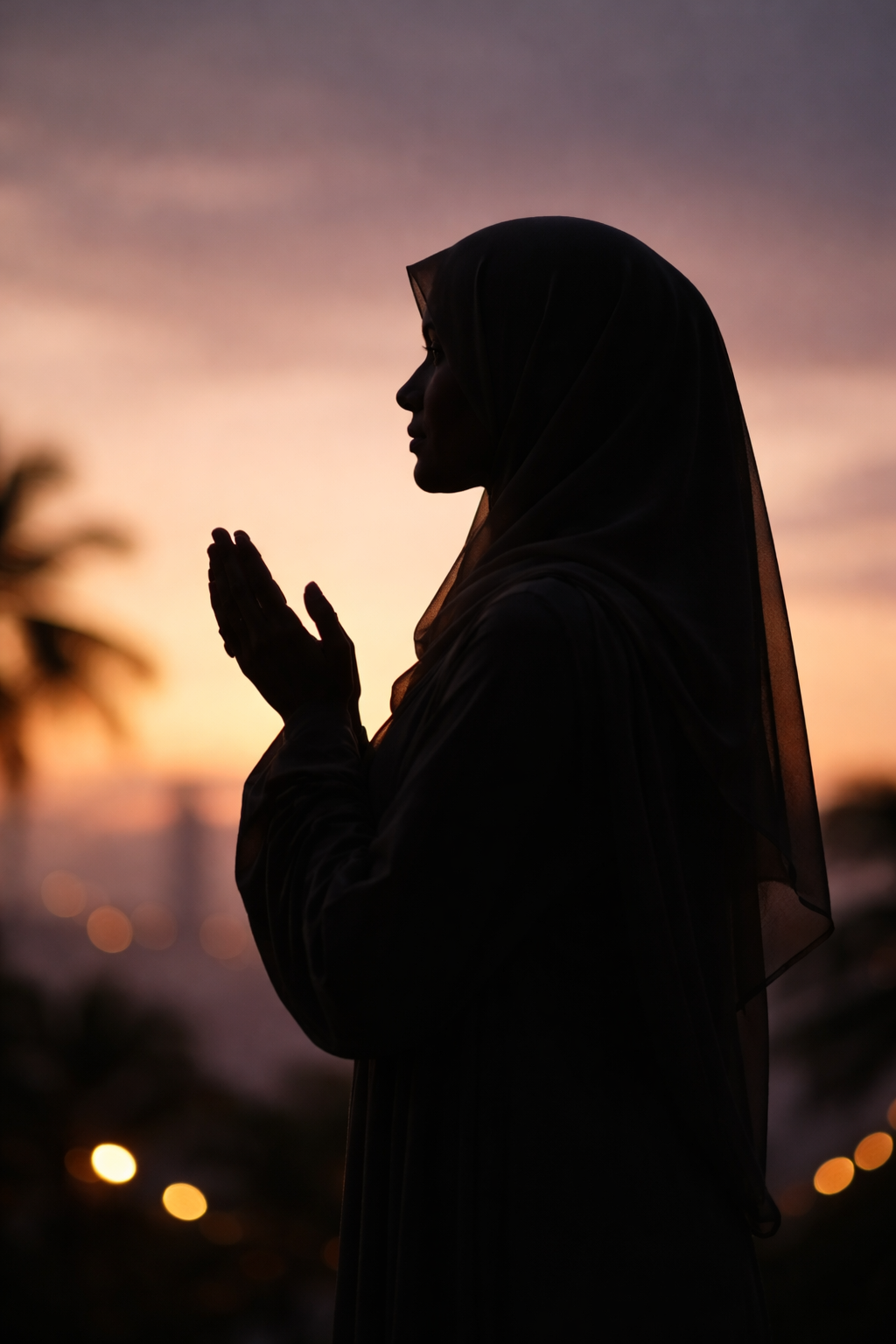
How to Pray Salah
The complete guide to the five daily prayers — Farḍ, Wājib, Sunnah Muʾakkadah, and Nafl — with full Arabic text, transliteration, translation, and scholarly references.
"Indeed, prayer has been decreed upon the believers a decree of specified times."
Qur'an — Sūrah An-Nisā' 4:103Salah is the second pillar of Islam and the most constant act of worship in a Muslim's life — performed five times every day without exception. It was not sent down through an angel like other revelations, but was ordained directly to the Prophet ﷺ during his ascension to the heavens, the Night of al-Mi'rāj — a distinction given to no other act of worship in all of religion.
"The first matter that the slave will be brought to account for on the Day of Judgement is the prayer. If it is sound, then the rest of his deeds will be sound. And if it is corrupt, then the rest of his deeds will be corrupt."
Al-Ṭabarānī — Graded Ṣaḥīḥ by Al-AlbānīConditions of Valid Salah
Before entering prayer, eight conditions must be fulfilled — these are called Shurūṭ al-Ṣalāh (شُرُوطُ الصَّلَاةِ). If any is missing without excuse, the prayer is invalid.
Wuḍū' — Ritual Ablution
Required before every Farḍ prayer. The Qur'an prescribes it directly in Sūrah Al-Mā'idah.
"O you who have believed, when you rise to [perform] prayer, wash your faces and your forearms to the elbows, and wipe over your heads and wash your feet to the ankles."
Qur'an — Sūrah Al-Mā'idah 5:6Say Bismillāh before beginning. The Prophet ﷺ said: "There is no wuḍū' for the one who does not mention the name of Allah upon it." (Abū Dāwūd — Ḥasan)
Wash both hands up to the wrists three times, beginning with the right. Rub between the fingers. This is the opening Sunnah act before the obligatory washing begins.
Take water into the mouth, swirl, and expel. Then sniff water into the nose and blow out with the left hand. Do both three times. Exaggerate in a non-fasting state (deeply rinse the mouth and strongly sniff the nose).
From the hairline to the chin, and from ear to ear. Three times. Men with beards must thread fingers through the beard so water reaches the skin beneath.
Wash both arms including the elbows three times, right arm first. Ensure no dry patch remains anywhere from fingertips to elbow.
Wet the hands and pass them over the entire head from front to back and back to front — once. Then wipe both ears: index fingers inside, thumbs behind. This is one wiping, not three.
Wash both feet up to and including the ankles three times, right foot first. Use the little finger of the left hand to pass between the toes. Ensure every part is reached.
The Prophet ﷺ said: "Whoever performs wuḍū' and says this — all eight gates of Paradise will be opened for him, and he may enter from whichever he wishes." (Muslim)
The Five Daily Prayers
Each prayer has a time window and a set of rak'āt — obligatory (Farḍ), confirmed Sunnah (Muʾakkadah), and voluntary (Nafl).
| Prayer | Arabic | Time | Sunnah Before | Farḍ | Sunnah After | Nafl |
|---|---|---|---|---|---|---|
| Fajr | الْفَجْر | Dawn to sunrise | 2 Rak'āt | 2 Rak'āt | — | — |
| Dhuhr | الظُّهْر | After zenith to Asr | 4 Rak'āt | 4 Rak'āt | 2 Rak'āt | 2 Nafl |
| Asr | الْعَصْر | Afternoon to sunset | 4 Rak'āt (Ghayr) | 4 Rak'āt | — | — |
| Maghrib | الْمَغْرِب | After sunset to darkness | — | 3 Rak'āt | 2 Rak'āt | 2 Nafl |
| Isha | الْعِشَاء | Darkness to dawn | — | 4 Rak'āt | 2 Rak'āt | 2 Nafl + Witr |
The total obligatory rak'āt daily is 17. Including the confirmed Sunnah Rawātib, it reaches 29 rak'āt. The Prophet ﷺ promised: "Whoever preserves the twelve rak'āt of Sunnah, Allah will build a house for him in Paradise." (Tirmidhī — Ṣaḥīḥ)
Preparing for Salah
The confirmed Sunnah acts performed before entering prayer — acts the Prophet ﷺ consistently practised and encouraged.
The Prophet ﷺ said: "Were it not for the difficulty it would cause my Ummah, I would have ordered them to use the miswāk for every prayer." (Bukhārī & Muslim). Using it before wuḍū' or before prayer carries great reward.
Allah says: "O children of Adam, take your adornment at every masjid." (Al-A'rāf 7:31). One should dress as they would when standing before someone of the highest honour.
It is Sunnah to repeat after the muezzin. When he says Ḥayya 'alaṣ-ṣalāh and Ḥayya 'alal-falāḥ, respond: Lā ḥawla wa lā quwwata illā billāh ("There is no might or power except through Allah").
The Prophet ﷺ said: "Whoever says this after the Adhān, my intercession will be lawful for him on the Day of Resurrection." (Bukhārī)
Before Fajr: 2 Rak'āt. Before Dhuhr: 4 Rak'āt. Before Asr (optional): 4 Rak'āt. These are detailed in the Sunnah Rawātib section below.
Face Makkah. Stand calmly. Make the intention silently in the heart — state internally: I intend to pray [Fajr / Dhuhr etc.] for Allah. No verbal niyyah is required or established from the Sunnah.
How to Pray — Step by Step
A complete walkthrough of every action and recitation, from the opening takbīr to the final salām.
Stand upright facing the Qiblah, feet shoulder-width apart. This standing position is itself a Rukn (pillar) of the prayer. One who cannot stand may sit; one who cannot sit may lie on their side.
Raise both hands to earlobe level (men: thumbs touching earlobes; women: hands to shoulders), palms facing the Qiblah. Say Allāhu Akbar. Then fold the right hand over the left on the chest. This takbīr is the entry into the sacred state of prayer — once said, all worldly speech becomes prohibited.
Said silently after the opening takbīr, in the first rak'ah only. Other forms are authentically narrated (e.g. the longer form beginning Wajjahtu wajhiya… for the night prayer). Choose one and be consistent.
Said silently before Al-Fātiḥah, in the first rak'ah only. Allah commands in the Qur'an: "When you recite the Qur'an, seek refuge in Allah from the accursed Shaytān." (An-Naḥl 16:98)
The Prophet ﷺ said: "There is no prayer for the one who does not recite the Opening of the Book." (Bukhārī & Muslim). This is obligatory in every single rak'ah. After Fātiḥah, say Āmīn (آمِين) — "O Allah, accept."
In the first two rak'āt, recite any portion of Qur'an after Al-Fātiḥah. Common choices: Al-Ikhlāṣ, Al-Kāfirūn, Al-Kawthar, Al-Falaq, An-Nās. The Prophet ﷺ recommended longer sūrahs for Fajr and shorter ones for Maghrib. In the 3rd and 4th rak'āt, recite only Al-Fātiḥah.
Say Allāhu Akbar while going into the bow. Place hands firmly on knees, fingers spread. Back must be straight and level — parallel to the ground. Head in line with spine. Recite the above. Minimum: once. Sunnah: three times. Stillness (ṭuma'nīnah) here is obligatory — rushing invalidates the prayer.
Rise saying the first phrase. Once upright and still, say the second. The imam says both; the follower says only the second; one praying alone says both. Stillness while standing fully erect is a Rukn.
Say Allāhu Akbar descending. The Prophet ﷺ commanded: "Prostrate on seven bones" — the forehead with nose, both palms, both knees, toes of both feet. All seven must touch simultaneously. Elbows must be raised off the ground, not resting on it. Recite the above. Minimum: once. Sunnah: three times.
Rise from first sujūd saying Allāhu Akbar. Sit upright on the left foot (right foot upright, toes toward Qiblah). Stillness here is a Rukn. Recite the above, minimum once, sunnah three times. Then go into the second sujūd with the same recitation.
After the second sujūd, say Allāhu Akbar and rise. Push from the knees. Stand fully. Begin the next rak'ah from Al-Fātiḥah — no opening du'ā or ta'awwudh in subsequent rak'āt. Repeat steps 5–10 for each rak'ah.
Sit in iftirāsh (on left foot, right foot upright). Raise the right index finger when saying the shahādah. In a 2-rak'ah prayer, remain and go to step 13. In a 3 or 4 rak'ah prayer, rise for the remaining rak'āt after this tashahhud.
Recite the full tashahhud again, then add this Durūd. Sit in tawarruk position (left foot under the right leg, right foot upright). Then optionally add the du'ā al-qunūt or personal du'ā before the final taslīm.
The Prophet ﷺ instructed his companions to seek refuge from these four before every taslīm. (Bukhārī & Muslim)
Turn the head to the right while saying this, then to the left — completing the prayer on both sides. The prayer is now concluded. The sacred state of iḥrām al-ṣalāh has ended. It is Sunnah to follow immediately with the post-prayer dhikr.
The Postures of Salah
The six essential bodily positions — each a distinct act of worship with its own recitation and meaning.
Fajr Prayer
Dawn prayer — the most virtuous of all five, witnessed by the angels of night and day.
"And [also] the Qur'an of dawn — indeed, the recitation of dawn is ever witnessed."
Qur'an — Sūrah Al-Isrā' 17:78The Prophet ﷺ said of the two Sunnah rak'āt of Fajr: "The two rak'āt of Fajr are better than this world and everything in it." (Muslim). They are prayed lightly and quickly — the Sunnah recitation is Al-Kāfirūn in the 1st rak'ah and Al-Ikhlāṣ in the 2nd. Complete the 2 Farḍ with loud recitation. No voluntary prayer should be prayed after Fajr until after sunrise.
Dhuhr Prayer
The midday prayer — prayed when the heavens are fully open and deeds ascend to Allah.
The Prophet ﷺ said: "Whoever prays four rak'āt before Dhuhr and four after, Allah will forbid him from the Fire." (Abū Dāwūd — Ṣaḥīḥ). The 4 Farḍ are prayed with a sitting (tashahhud) after the 2nd rak'ah before rising. Recitation throughout is silent. After completing the 4 Farḍ, pray 2 Sunnah.
Asr Prayer
The middle prayer — specifically singled out in the Qur'an for protection and guard.
"Guard strictly the [five obligatory] prayers, especially the middle prayer (Asr). And stand before Allah devoutly obedient."
Qur'an — Sūrah Al-Baqarah 2:238No confirmed Sunnah follows Asr. No voluntary prayer is to be prayed after Asr until after sunset. The Prophet ﷺ forbade this explicitly (Bukhārī).
Maghrib Prayer
The sunset prayer — the only obligatory prayer of 3 rak'āt, and one that must not be delayed.
After the 2nd rak'ah, sit for the first tashahhud (up to shahādah only). Rise for the 3rd rak'ah — recite Al-Fātiḥah only, silently. Complete and give taslīm. Then pray the 2 Rak'āt Sunnah.
Isha Prayer
The night prayer — the richest in voluntary rak'āt, and the gateway to the night prayers of Witr and Tahajjud.
The Prophet ﷺ recommended delaying Isha to the final third of its time when not burdensome. After the 4 Farḍ: pray 2 Sunnah, then optionally 2 Nafl. Close the night with Witr before sleeping.
Sunnah Rawātib
The twelve rak'āt the Prophet ﷺ never abandoned — and for which a house in Paradise is promised.
"Whoever prays twelve rak'āt in a day and night, Allah will build a house for him in Paradise: four before Dhuhr, two after, two after Maghrib, two after Isha, and two before Fajr."
Tirmidhī — Graded Ṣaḥīḥ by Al-Albānī| Prayer | When | Rak'āt | Type | Note |
|---|---|---|---|---|
| Fajr Sunnah | Before Fajr Farḍ | 2 | Muʾakkadah | "Better than the world and all in it" (Muslim) |
| Before Dhuhr | Before Dhuhr Farḍ | 4 | Muʾakkadah | Can be prayed as 2+2 or 4 with one taslīm |
| After Dhuhr | After Dhuhr Farḍ | 2 | Muʾakkadah | Part of the twelve rak'āt |
| Before Asr | Before Asr Farḍ | 4 | Ghayr Muʾakkadah | "May Allah have mercy on one who prays 4 before Asr" (Abū Dāwūd) |
| After Maghrib | After Maghrib Farḍ | 2 | Muʾakkadah | Part of the twelve rak'āt |
| After Isha | After Isha Farḍ | 2 | Muʾakkadah | Part of the twelve rak'āt |
Sunnah Rawātib are prayed with silent recitation throughout, regardless of whether the corresponding Farḍ is loud or silent. They may be prayed at home — the Prophet ﷺ preferred this. If the Sunnah before a prayer is missed, it may be made up after the Farḍ.
Witr Prayer — الْوِتْر
The odd-numbered closing prayer of the night — Wājib (Ḥanafī) or Sunnah Muʾakkadah (majority). Never abandoned by the Prophet ﷺ even while travelling.
Recitation in the 3 Rak'āt Witr
1st rak'ah: Sūrah Al-A'lā (Sabbihisma). 2nd rak'ah: Sūrah Al-Kāfirūn. 3rd rak'ah: Sūrah Al-Ikhlāṣ — and sometimes Al-Falaq and An-Nās as well.
Du'ā al-Qunūt — The Witr Supplication
اللَّهُمَّ اهْدِنِي فِيمَنْ هَدَيْتَ، وَعَافِنِي فِيمَنْ عَافَيْتَ، وَتَوَلَّنِي فِيمَنْ تَوَلَّيْتَ، وَبَارِكْ لِي فِيمَا أَعْطَيْتَ، وَقِنِي شَرَّ مَا قَضَيْتَ، فَإِنَّكَ تَقْضِي وَلَا يُقْضَى عَلَيْكَ، وَإِنَّهُ لَا يَذِلُّ مَنْ وَالَيْتَ، تَبَارَكْتَ رَبَّنَا وَتَعَالَيْتَ
Allāhummahdinī fīman hadayt, wa 'āfinī fīman 'āfayt, wa tawallanī fīman tawallayt, wa bārik lī fīmā a'ṭayt, wa qinī sharra mā qaḍayt. Fa innaka taqḍī wa lā yuqḍā 'alayk, wa innahu lā yadhillu man wālayt. Tabārakta Rabbanā wa ta'ālayt.
"O Allah, guide me among those You have guided, grant me wellbeing among those You have granted wellbeing, be my guardian among those whose guardian You have been, bless me in what You have given me, protect me from the evil of what You have decreed. For You decree and none can decree over You. None is humiliated whom You have befriended. Blessed and Exalted are You, our Lord."
Abū Dāwūd, Tirmidhī, Ibn Mājah — ṢaḥīḥRecited in the final rak'ah after rising from rukū' (or before rukū' according to some scholars). Raise both hands to the level of the shoulders. This du'ā may be followed with additional personal supplication and ṣalāt on the Prophet ﷺ before completing the prostration.
Tahajjud — قِيَامُ اللَّيْل
The night prayer after sleeping — the most virtuous voluntary prayer, and the station of those closest to Allah.
"And from [part of] the night, pray with it as additional [worship] for you; it is expected that your Lord will resurrect you to a praised station."
Qur'an — Sūrah Al-Isrā' 17:79Tahajjud is prayed after waking from sleep, in the last third of the night. The Prophet ﷺ regularly prayed 8 rak'āt (4 sets of 2) followed by 3 Witr. Recitation is long and contemplative. Begin with this opening du'ā:
اللَّهُمَّ لَكَ الْحَمْدُ، أَنْتَ نُورُ السَّمَاوَاتِ وَالْأَرْضِ وَمَنْ فِيهِنَّ
Allāhumma lakal-ḥamd, anta nūrus-samāwāti wal-arḍi wa man fīhinn…
"O Allah, all praise is Yours. You are the Light of the heavens and the earth and all who are in them…"
Ṣaḥīḥ al-Bukhārī — Opening Du'ā of the Night PrayerThe Prophet ﷺ said: "The best prayer after the obligatory prayers is the night prayer." (Muslim). In the last third of every night, Allah descends to the lowest heaven, calling: "Who is supplicating Me, that I may respond? Who is asking of Me, that I may give? Who is seeking My forgiveness, that I may forgive?" (Bukhārī & Muslim). Rise and meet it.
Common Mistakes in Salah
Errors that affect the validity or completeness of the prayer, as identified by classical and contemporary scholars.
Sources & References
All rulings, narrations, and descriptions in this guide are drawn from the following classical and scholarly sources.
Al-Qur'ān al-Karīm — Translation: Sahih International. Key verses: 2:238, 4:103, 5:6, 7:31, 16:98, 17:78–79.
Ṣaḥīḥ al-Bukhārī — Kitāb al-Ṣalāh; Kitāb al-Adhān; Kitāb al-Wuḍū'. The most authoritative collection of Prophetic ḥadīth.
Ṣaḥīḥ Muslim — Kitāb al-Ṣalāh; Kitāb Ṣalāt al-Musāfirīn wa Qaṣruhā.
Sunan Abī Dāwūd — Kitāb al-Ṣalāh. Extensive rulings on posture, miswāk, and sunnah acts.
Jāmi' al-Tirmidhī — Narrations on Sunnah Rawātib and the reward of twelve rak'āt.
Sunan Ibn Mājah — Qunūt al-Witr narration and wuḍū' rulings.
Ṣifat Ṣalāt al-Nabī ﷺ — Shaykh Muḥammad Nāṣiruddīn al-Albānī. The most comprehensive modern compendium of the Prophet's ﷺ prayer drawn entirely from authentic ḥadīth. Primary reference for this guide.
Al-Mughnī — Ibn Qudāmah al-Maqdisī (d. 620H). Classic Ḥanbalī jurisprudential reference for the pillars, obligations, and conditions of prayer.
Fiqh al-Sunnah — Sayyid Sābiq. Cross-madhab reference for prayer rulings.
Zādul-Ma'ād — Ibn al-Qayyim al-Jawziyyah (d. 751H). For descriptions of the Prophet's ﷺ night prayer, Witr, and Tahajjud.
Al-Fiqh al-Islāmī wa Adillatuh — Dr. Wahbah al-Zuḥaylī. Encyclopaedic comparative fiqh reference.
Note on scholarly differences: Where the four madhāhib differ (e.g. Witr being Wājib vs. Sunnah Muʾakkadah), both positions are noted. Readers should follow a qualified scholar in their tradition.