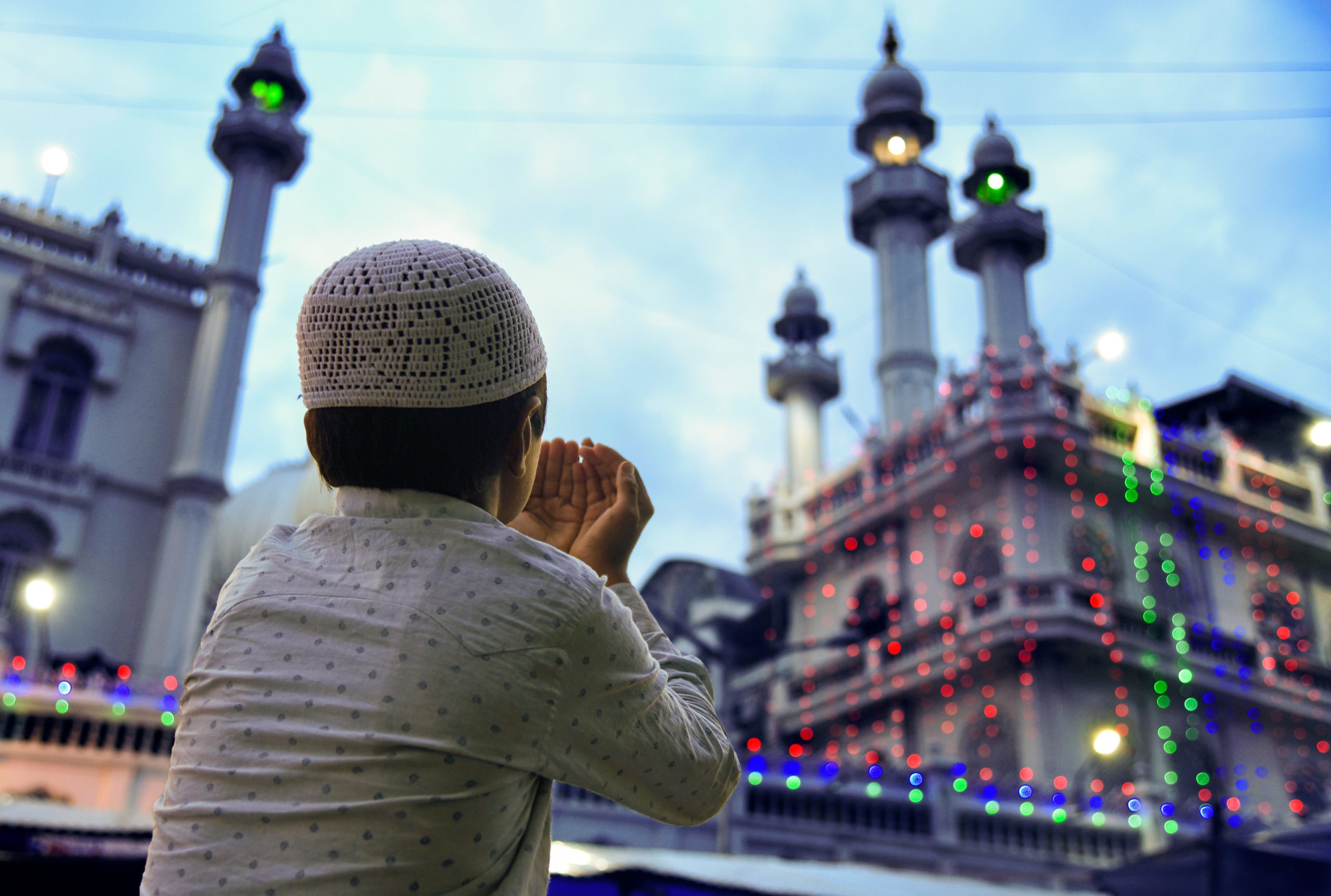
Aches, Idlis, and the Call That Says: Prayer Is Better Than Sleep
A morning of small pains, quiet gratitude, an honest fear — and the intentions that carry a day forward.
A Body That Speaks First
Day 3 began before I was ready for it. My shoulder woke up with me — a familiar, dull ache that made itself known the moment I shifted from the bed. It has been worse before, much worse. Today it was manageable: the kind of pain that reminds you it is there without insisting you to stop. And so I did not stop.
My youngest was already awake. He always is. He is the lightest sleeper in this house — the kind who stirs at the softest sound, who cannot be settled back down once the morning has reached him. There is something both tender and heartbreaking about finding him awake, watching, when the rest of us arrive. He is the first to greet each day, whether he wants to be or not.
As I made my way to the kitchen, shoulder still complaining, I was already thinking about the idlis. I had made them the night before — poured them out carefully, steamed them late — hoping they would see us through suhoor and spare me from cooking again so early. The idlis thrown away last night still sat with me as a small, quiet guilt. Wasted food during Ramadan carries its own particular sting. This happens during the normal days as well. But, during those times, we tend to be ignorant. So when this morning's plate cleared steadily — each person eating without complaint, nothing left — I felt genuinely relieved. A small mercy. A fresh start.
Alhamdulillah for the aches too. Every pain that is borne with patience is, by His mercy, an erasing of sins. Even this shoulder pain- this early in the morning. Even this gives me hope for something better coming my way.
The Azan and the Distance Between Knowing and Feeling
As I settled down to write, I heard it — the azan drifting through the quiet of the house. And within it, that line I have heard hundreds of times and will hear hundreds more, Insha Allah:
I know it. I have always known it — its meaning, its intent, the weight it is meant to carry. And yet I sat this morning with an honesty I rarely say out loud: knowing something and truly feeling it are two entirely different things, and the gap between them is one I have not yet fully closed. I am still not ready to pray today, I realize the fact and acknowledge it. I want to join the rest soon, my mind repeated again.
There is a version of faith that lives in the mind — tidy, accurate, well-organised. You can define the terms, explain the significance, pass the test. And then there is the kind that lives in the body, that pulls you upright before the mind has had a chance to argue, that makes the call feel irresistible rather than merely correct. I long for more of the second kind. I know what I am supposed to feel when the azan sounds. I pray that one day, through enough nearness to Allah and enough honest effort, I will simply feel it — not because I have reasoned my way there, but because something in me has been changed enough to respond that way naturally.
That longing itself feels like a kind of prayer. And so I offer it as one.
May Allah make me someone who rises toward salah — not because I have convinced myself to, but because I cannot imagine not doing so. May He close the distance between what I know and what I feel.
On Being Afraid to Ask
I noticed something in myself this morning that I want to set down before it slips away, because it is the kind of quiet confession that does not stay put unless you name it properly.
There are times when I am afraid to ask Allah for things. Not because I doubt His power, and not because I have stopped believing He listens. But because somewhere in me there lives a quiet fear: that if I ask earnestly — if I truly ask to be drawn closer to Him, to be made better, to have my heart changed — the path to that answer might run through trials I am not sure I can bear. That He might answer the prayer by first breaking something open in me.
I know this is, in one sense, a misunderstanding of who He is. I know that He is Al-Lateef — the Subtle, the Gentle — and that He does not burden a soul beyond what it can carry. I know the trials of those He loves are a sign of closeness, not punishment. I know all of this. And yet the fear is still real, sitting quietly just beneath the surface of my supplications, present even when I do not invite it.
So I have learned to ask with care. I ask with specific detail — not vague requests for goodness, but named, shaped, honest asks. And I always, always include the same word alongside them: ease. Let me grow, yes. Let me be better. Let me draw closer. But gently, Ya Allah. With ease. With mercy. I trust You — and I also know myself. So I ask You, who knows me better than you do, and who knows it better to be gentle in how You answer my prayers.
"Allah does not burden a soul beyond that it can bear."
Qur'an 2:286This morning, I made those asks again. For growth that does not shatter. For nearness to Allah that arrives not only through difficulty, but also through small, quiet moments of recognition — like hearing the azan and feeling it land differently than it did the day before.
What I Am Carrying Into This Day
Before the morning opened fully, I held a few specific duas close — the ones that have been following me through this Ramadan with particular persistence. Each one is a door I am knocking on. I trust that He hears.
This is the prayer beneath all the other prayers. May Allah make me better today than I was yesterday — not in leaps that feel dramatic, but in small, consistent steps that quietly accumulate. Better in patience. Better in gratitude. Better in how I speak and how I listen. Better in the private, invisible places where only He can see. A better Muslimah not in performance, but in the bone-deep, private reality of who I am when no one is watching.
I ask Allah to make this step easy for me. Not to compel it through pressure or shame, but to make the path to it feel natural — to soften whatever hesitation still lives in me and replace it with readiness. May my heart arrive there first, so that when the moment comes, it feels not like a struggle but like a homecoming. May Allah make me walk towards it with love and ease, and not with fear.
Next week I will be away for work — hotel rates have already climbed, as they do when a city fills up for an event, and the logistics of it sit with me as a quiet, low-level weight. I ask Allah to grant me a good deal on accommodation, and a room close enough to the office that the mornings begin calmly rather than in a rush. I ask for ease on the drives there and back. For good, warm interactions with the people I will be working alongside. For the kind of quiet competence that comes not from strain but from His barakah placed gently in my efforts. May the whole trip carry His name from start to finish.
While I wait for my own ability to fast fully, my family is doing it — day by day, hunger by hunger, quietly carrying what this month asks of them. I ask Allah to make each of their fasts light on the body and heavy on the scales. May they reach Maghrib with ease, break their fast with gratitude, find enough left in themselves for Tarawih at the masjid, and return home to rest properly. May this Ramadan leave a mark on each of them — a real one, a lasting one — that outlives the month itself.
This intention sits close to my heart, quieter than the others but heavier. I am hoping, and I am asking, that I will be able to begin fasting when I am at Albany next week. The longing to be present in this Ramadan in the fullest way — to feel the specific hunger that teaches you something no full stomach ever can — has not left me for a single day of this month so far. I bring it before Him again today: Ya Allah, allow me to join my family in this. Let me fast. Let me pray fully. Let me be fully here, in this month, before it ends.
Today's Intentions
My intentions for Day 3 carry forward from yesterday. There is something quietly faithful about continuity — the recognition that even when a day falls short of what you hoped, showing up again with the same intentions is itself a form of not giving up. Today I intend to:
I am continuing through His Most Beautiful Names — not racing, but sitting. Today I want to carry at least one name through the full hours of the day and watch where it surfaces. His names are not merely vocabulary to be filed away. They are windows. Each one, when held with attention, changes what you are able to see.
The longest surah in the Qur'an, and one of the most layered. I am not rushing through it. I want to sit with each ayah long enough to understand what it is saying and why it is placed where it is. The Qur'an was not sent down to be completed quickly. It was sent down to be lived alongside.
I want to add to the personal du'a I have been building across these first days — anchoring each ask in a specific name of Allah. There is a precision that becomes possible when you do this. You are no longer asking into the general. You are calling on Him by the quality most relevant to what you need — and that specificity changes everything about how the asking feels.
Just one. Learned slowly, understood fully, until it belongs to me. This is how the heart fills over thirty days — one phrase at a time, laid down with care, kept there with intention. Thirty days, thirty things I did not carry before I entered this month.
For my family: patience over irritation, warmth over distance, presence over distraction. For work: genuine usefulness — not just showing up, but actually contributing. And above all else: to be, today, a slightly better Muslimah than I was yesterday. Not perfect. Not transformed. Just one quiet step further in the right direction. Insha Allah.
Moving Forward
This is how Day 3 begins. Not dramatically. Not with a surge of energy or a morning that felt cinematic. Just a shoulder that ached, a youngest child already awake, a plate of idlis that disappeared exactly as hoped, and a line from the azan that settled somewhere in my chest and stayed there.
I am not fasting yet. I am not praying with the fullness I long for. I am somewhere on the road toward the version of myself that this month is slowly shaping — and I am choosing, this morning, to trust that the road leads somewhere worth walking toward.
Towards success. Towards Allah. With this hope, I move ahead.
Ameen.
"And it may be that you dislike a thing which is good for you, and that you like a thing which is bad for you. Allah knows, and you do not know."
Qur'an 2:216Maktub
It is written. Every last word of it. And in that — if you will truly let it in — there is a peace that nothing else in this world can give you.
Everything. All of It. Already Written.
Your smile on an ordinary morning. The tears that arrived without warning on a day you were certain would be fine. The love that shaped you — and the love you reached for that never quite came. The hate that found you when you did nothing to invite it. The relief that broke through at the very last moment. The happiness that caught you off guard. The grief that stayed longer than felt fair.
The journeys. The destinations you reached and the ones that slipped away. The detours that turned out, eventually, to be the whole point. The strangers who said one sentence and quietly changed something in you. The people you called your own. The places — the rooms, the streets, the cities — that held you at different chapters of your life. The schools you attended. The celebrations. The parties where you laughed until your sides hurt. The miseries you endured in silence, certain no one could see the full weight of them.
Your children. Your parents. Your siblings. Your spouse. Your friends. Your acquaintances — those peripheral, unexpected people who appeared briefly and left something behind without either of you planning it. The things you own. The things you longed for and never received. The things you shared. The things you lost. The homes you will live in. The homes you will one day leave.
The incidents. The panic. The calm that came after. The relationships that built you and the ones that cost you. The destinations you will travel to. The people you haven't met yet who will matter more than you can imagine. Every celebration still ahead. Every hardship still to come.
All of it — every last thread of every single day — is written.
"No disaster strikes upon the earth or among yourselves except that it is in a register before We bring it into being — indeed that, for Allah, is easy."
Qur'an 57:22So Why Are We Still in Panic?
This is the question that sat with me this morning, turning itself over quietly somewhere between the azan and the first cup of coffee. If it is all written — truly, completely, already recorded before a single day of it arrived — then what exactly are we panicking about?
Think about it with full sincerity. The situation you are dreading right now: written. The outcome you are terrified will not come through: written. The relationship hanging in uncertainty: written. The job, the money, the health report you are waiting on, the conversation you have been avoiding for weeks — all of it is already in the register of Allah. Every detail. Every turning point. Every resolution, whether painful or beautiful. None of it is improvised. None of it is left to chance. None of it will arrive as a surprise to the One who wrote it.
And now consider this: the du'a you made this morning — that too was written. The fact that it will be answered — in the form and at the time He has already chosen — was written. The change that comes through your supplication was written into the story before you even knew to ask. Even your prayers are part of the plot He authored. You are not interrupting the story when you call on Him. You are participating in it exactly as it was written for you to do.
There is no scenario in which you fall through the cracks of this. You are not a detail He overlooked. Not a subplot He left unresolved. Not a chapter He forgot to finish. Not a name He wrote in and later crossed out.
And if that is true — and it is — then the anxiety we carry is simply us arguing with a story that has already been written better than we ever could have written it ourselves.
But Does This Mean We Just… Wait?
This is the question that almost always follows — and it deserves an honest answer. If everything is already written, why would I try? Why strive, plan, pray, or work toward anything, if the ending is already set?
Because here is what maktub does not mean: it does not mean that your effort is irrelevant. It does not mean that a person who sits down and does nothing is living in the same story as the one who gets up every morning and tries. If a life of laziness is written for someone — that is exactly what they will live. But a person who wakes up with intention, who works toward what is good, who makes du'a and then also makes effort — that too is exactly what was written for them. The effort itself is part of the story. Your trying is not separate from the plot. It is the plot.
There is a narration that captures this with a precision nothing else has matched.
Tie the Camel
A man came to the Prophet Muhammad ﷺ with a question that sounds almost too simple for the depth of the answer it contains. He asked: should I tie my camel and trust in Allah — or should I leave her untied and trust in Allah?
He was asking, really, about all of us. About the relationship between effort and surrender, between doing and releasing, between the work of our hands and the will of our Lord. The question every anxious person has ever asked in one form or another: how much is mine to do, and how much do I have to let go of?
The Prophet ﷺ replied: "Tie her, and put your trust in Allah."
Sunan al-Tirmidhī | Anas ibn Mālik (raḍiyallāhu ʿanhu)This is not a contradiction. It is the whole picture, held in four words. Tawakkul — genuine, deep, rooted trust in Allah — does not mean sitting still and calling it faith. It does not mean placing your camel outside unguarded and expecting her to still be there in the morning because you trusted in Allah. Tawakkul means doing everything within your reach, with everything that you have, as well as you possibly can — and then, and only then, releasing the outcome to the One who holds all outcomes already in His hand.
The effort is yours. The result is His. And whatever the result turns out to be — it was written before you even picked up the rope.
Maktub does not make you passive. It makes you free. You work. You try. You show up. And then — you breathe. Because the rest, truly, is not yours to carry.
What This Looks Like in a Real Life
I am going to Albany for work. Every week, I will pack a bag and leave my family, my home, the rhythms that keep me steady. I will stay in hotel rooms, sit in conference spaces, and return tired in ways that are not only physical. For a long time, I held that knowledge with a quiet grief. The distance. The missing. The things I would not be present for.
But lately I have been sitting with a different question entirely. What if that was written not as a loss, but as something else? What if the weekly separations exist so that when I come back through the door, I remember — really remember — what I am coming back to? What if distance is one of the ways some families learn to treasure closeness? What if my children, watching me leave and return, leave and return, are quietly internalising something about love being consistent, about effort being a form of devotion, about someone always coming back?
What if the hotel room — alone, away from everything — becomes where I pray more deliberately, where I miss my family in a way that makes me a better mother and wife when I return, where I find out what I am actually made of when no one is watching?
I do not know for certain that any of this is the reason. But I know it was written. And if it was written by the One who loves me more than I love myself — the One who is Al-Lateef, whose gentleness operates in ways too fine for human eyes to trace until they look back — then I can trust the reason, even before I can see it.
The Things We Are Each Carrying
There are seasons of darkness that no amount of logic makes easier to walk through. When you are inside depression, telling yourself that it was written does not instantly remove the weight of it. But it does — slowly, in moments of genuine surrender — offer something else: the possibility that this too is not meaningless. That the pain which strips away everything comfortable might be doing something specific to you, something that could not have been done any other way.
What I have found in the lowest moments of this season is that I run out of places to put my weight except on Allah. Everything else eventually gives way. He does not. And so the darkness, as much as I would not have chosen it, has made me reach toward Him in ways that ease never asked of me. The begging that becomes closeness. The closeness that becomes, slowly, steadily, peace. Maybe that was the point all along. Not the suffering itself — but where it sends you. Who it sends you to.
The things that come easily are rarely the things we hold most dear. Think of anything in your life that you worked for, fought for, waited long and painfully for — and then finally received. Compare that to something handed to you without effort, without cost. The former lives in a different part of you. It has roots. It cannot be taken the same way. It means something in a way the easy thing never quite can.
The struggle with hijab — the returning to it, the gap between who you are trying to be and who you are managing to be on any given day — is not a sign that it is too hard. It is not a sign that you are not meant for it. It is a sign that when it finally settles, it will be worth something extraordinary. The reward is measured, in part, by the weight of what was endured to earn it. The harder the struggle, the deeper the roots when it takes hold. And Allah sees every single attempt, every recommitment, every morning you try again.
The Peace That Is Available to You Right Now
This is what maktub offers — not the false peace of not caring, not the numbness of giving up, not a passive acceptance that sits on its hands and calls it faith. But the deep, settled, rooted peace of a person who has genuinely believed this one sentence: Allah already knows how this ends. And He is good.
That peace does not require your situation to change. It does not require the hard thing to resolve first or the answer to arrive before you can breathe again. Maktub does not cancel difficulty. It does not promise that the hard chapters will not come. What it does is hold them inside a larger story — one in which every painful page is leading somewhere, one in which the Author has never once lost the plot, one in which you are not a mistake or an accident or simply a person to whom things happen.
You are written. Your name is in the story. Every single page of it was crafted by the One who knows you most completely and loves you most persistently — who was Al-Lateef with you before you were born, who is Al-Lateef with you right now in the middle of whatever you are carrying, and who will be Al-Lateef with you in every chapter that has not yet arrived.
"And He is the Subtle, the Acquainted."
Qur'an 67:14 — Al-Lateef, Al-KhabeerSubtle. He works in ways too fine to see until you look back and realise what was being arranged all along. He places the right person in the right corridor of the right year. He writes separations that make reunions sweeter. He writes difficulties that make ease more deeply felt. He writes struggles whose purpose only becomes clear in the chapter after. Nothing in your story is wasted. Not the pain. Not the waiting. Not the years that felt lost. Not the camel, tied or untied.
So Here Is What You Do
You tie the camel. You do the work that is yours to do. You go to Albany, or the hospital, or the difficult conversation, or the prayer mat. You make the du'a and also make the effort. You try again with the hijab. You get out of bed on the morning that asks everything of you to simply get out of bed. You keep showing up — not because you can control the outcome, but because showing up is your part of the story.
And then — this is the part that changes everything — you release it. You open your hands. You say, with as much of yourself as you can manage in that moment, the sentence that is both the simplest and the most profound act of worship available to any human being:
I have done what I can.
The rest is Yours.
And whatever You have written — I trust it.
That is not resignation. That is not giving up. That is the highest, most active, most courageous form of faith. That is tawakkul. That is maktub not merely believed in the mind but lived with the whole body — the effort made, the hands opened, the heart released.
The peace that follows does not wait for the situation to resolve. It does not arrive after the answer comes. It arrives — quietly, solidly, like ground appearing under your feet — the moment you genuinely let go. And that moment is available to you right now. Today. In the middle of whatever you are carrying.
It is all written. And in the hands of the One who wrote it, that is the most comforting sentence in any language on earth.
Ameen.
Coming soon — a personal supplication rooted in the Names of Allah.
Coming soon — one supplication, learned slowly and kept for life.