Chapter 8-Biriyani Spot
Umrah ChroniclesAn Irachchi Putt Experience
— • —
Irrachi Putt, A Piece of Malabar
Kutty is what they called him at first. Later, he declared his name was Hussain. And later they would know what his story was. He took us THERE... Not because it was a famous spot... Not because it had rave reviews. But because he knew exactly what they needed. And because they had chirped about not just food, but Malabar food during our entire drive with him. The three of us had been craving Malabar food ever since they landed in the Gulf. The chai or coffee did not hit us at the right spot. Neither did the halal burgers or the sandwiches tempt us. Something was missing, and they could feel it in their bones.
The drive was not too long. The board read—Biriyani Spot. Nothing poetic. Nothing loud or blaring. Just a name doing exactly what it sounded like, its duty. Biriyani—the word, has always seemed royal to me. It makes me feel rich and special, as though I am being treated with care and purpose. Inside, people spoke and laughed with each other as if they had known one another for a long time, like familiarity was part of the menu.
The air carried warmth and aroma from the kitchen. It felt like our own home. A place where they could be ourselves. A familiar feeling, one that settles gently in the heart and reminds us what comfort feels like in an unfamiliar space.
Each table held its own small universe, separated by a cloth fabric. The fabric swayed gently when someone passed by or peeked in for a quick look. Malayalam filled the room, unpolished, affectionate, and easy. Some dialects sounded familiar while others sounded different and interesting. They asked for the menu, and Shoukath Ali, the waiter with glasses and a smile, recited it like poetry. He was from Tirur, close to my hometown Nilambur. I called Nilambur my home, but Kozhikode was my real home.
Soon after, the orders were placed and Shoukath understood it all with ease. They ordered many things, yet it did not feel like too much. Restraint felt unnecessary in places like this. Malabar food is never about a single dish. It is about abundance, about generosity, about not leaving room for any regrets.
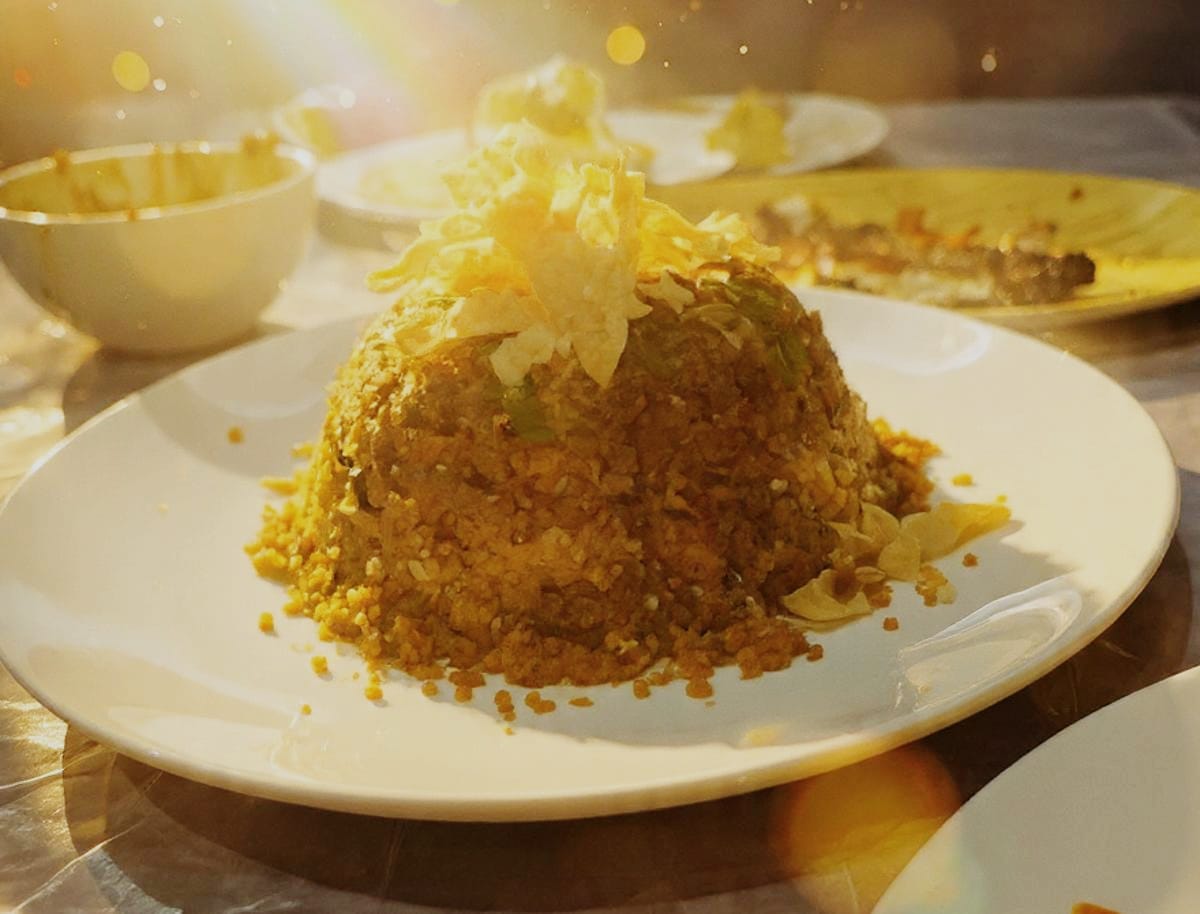
The dishes arrived in installments. First the salad. Then beef and porotta, followed by many others. And then came the irrachi putt. I did not give it much attention at first. It arrived without announcement. Brownish green, almost earthy. It looked harmless and innocent. Broken papadam rested on top, not arranged, just placed. Cracked. Casual. Honest. It looked simple, almost unfinished, the kind of food that does not perform for you.
Beef masala blended into tiny pellets of rice flour, not separated, but working as a partner. Each grain felt as though it had been slowly cooked, given time, never hurried. The beef cubes were soft and juicy. The whole dish looked like a small mountain on a white plate. Just like they would be served an upma. I scooped a small portion and brushed it onto my own plate. Then, the first morsel I took—the first bite. It was warm. The texture gave in gently, soft and smooth, with no resistance, no struggle. And then, quietly, it happened: contentment.
A fullness that did not sit in the stomach alone, but settled in the chest. A feeling I had not recognized in a long, long time. I asked for chai, because some flavors demand companionship. The spicy taste only got better with a desi hot chai.
The chai arrived in a glass cup. Effortless, it was the clear winner of the lot. It wrapped around the irrachi putt and held it, lifted it. Soon enough, the irrachi putt was done, but the want for it was not. They ordered another plate. Chai was also not enough. I needed more. So I ordered another. Behind the curtains, life continued.
The second plate of irrachi putt ended. The chai cups emptied. But something stayed along with us. A quiet gratitude.
Some meals feed the body. This one fed the space where tiredness lived. That night, far from where they came from, a simple dish did what cities, cafés, and substitutions could not. It reminded us that home is not always a place. Sometimes, it arrives quietly on a plate, warm and waiting, asking nothing more than for you to remember who you are.
— • —