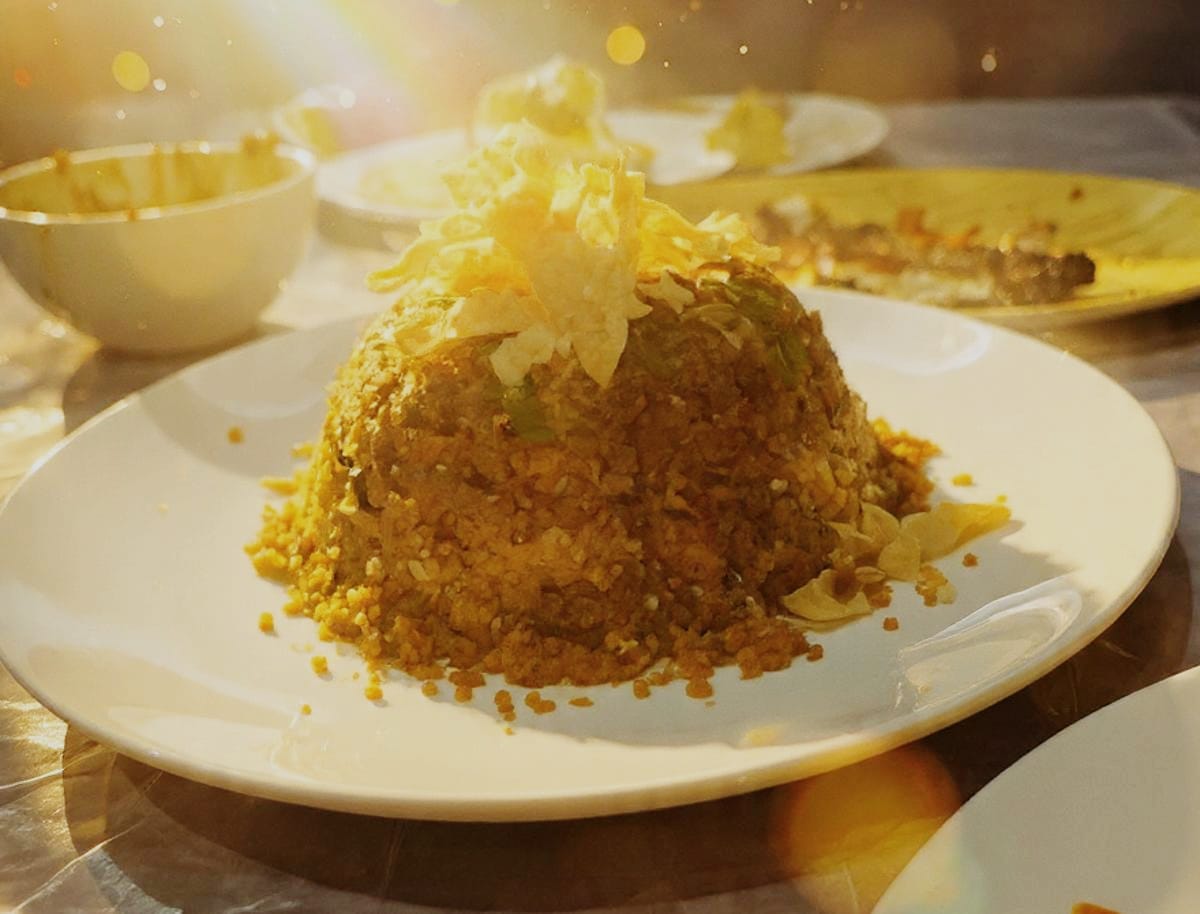
It arrived without announcement. Brownish green, almost earthy. It did not perform for you.
The dishes arrived in installments — first the salad, then beef and porotta, then a stream of others. And then came the irrachi putt. It arrived without ceremony. Brownish green, almost earthy. It looked harmless and innocent. Broken papadam rested on top — not arranged, just placed. Cracked. Casual. Honest. The kind of food that does not perform for you.
Beef masala blended into tiny pellets of rice flour — not separated, but working together as partners. Each grain felt as though it had been given time, slowly cooked, never hurried. The beef cubes were soft and yielding. The whole dish sat on the plate like a small, quiet mountain.
A small portion was scooped onto the plate. Then the first morsel. The first bite. It was warm. The texture gave in gently — soft, smooth, no resistance, no struggle. And then, quietly, it happened.
Contentment. A fullness that did not sit in the stomach alone, but settled in the chest. A feeling not recognized in a long, long time.
Chai was called for, because some flavours demand companionship. The spicy warmth of the irrachi putt only deepened alongside a proper desi chai. It arrived in a glass cup — effortless, the clear winner of the afternoon. It wrapped around the irrachi putt and held it, lifted it.
Soon enough, the plate was empty. But the wanting was not. Another plate was ordered. The chai cups emptied too, and then those were ordered again as well. Behind the curtain, life continued its quiet hum.